
Description du produit
Rotary Tiller Cultivator Gearbox for Agricultural
|
ARTICLE |
HC-9.311 Rotary Tiller Gearbox |
|
Rapport |
1:3 |
|
Dents |
36/12 |
|
Module |
4.35 |
|
Power(HP) |
50 |
|
Rated Input |
540rpm |
|
Description des entrées/sorties |
1 3/8 Z6 Optic axis/Optic axis |
|
Weight(N.W) |
21KG |
If you’re looking for Rotary Tiller Gearbox, you’ve come to the right place. Ever-power has a wide selection of the top brands to suit your particular mower and any tough task you need to tackle. Browse our selection to discover your many options in these essential parts to keep life on the farm running smoothly.
These are CB70 Series industrial gearboxes, which were independently designed by Ever-power. RG70 industrial gearbox helps to save mold-making fees, allowing for a lower cost for customers. Meanwhile, it has been sold on global
We Also Supply PTO Shafts
product-group/VqTESwWofuhM/PTO-Shaft-catalog-1.html
Advantages of Rotary Tiller Gearbox
Our Rotary Tiller Gearbox has many items for your choice and we can produce as per your drawing or sample to meet your special request
1. Large output torque
2. Safe, reliable, economical, and durable
3. Stable transmission, quiet operation
4. High carrying ability
5. High modularization design, may equip with various outer power inputs conveniently. The same machine type may equip with various power motors. It is easy to realize the combination and junction between every machine type
6. Transmission ratio: Fine division, wide scope. The combined machine type may form a very large transmission ratio, i. E. Output very low rotary speed.
7. Form of installation: The position to be installed is not limited.
8. High strength, compact the box body of high strength cast iron, gear and gear shaft adopt the gas carbonization, quenching, and fine grinding process, therefore the bearing capacity of unit volume is high.
9. Long life: Under the condition of the correct type chosen(including choosing suitable operation parament ) normal operation and maintenance, the life of the main parts speed reducer(except wearing parts)should not be less than 20000 hours. The wearing parts include lubricating oil, oil seal, and bearing.
10. Low noise: Because the main parts of the speed reducer are processed, and tested critically, therefore the noise of the speed reducer is low.
11. Our gearbox has reached the advanced international level and can replace the same kind of products imported.
Other gearboxes
Company Information
| Taper: | Agricole |
|---|---|
| Usage: | Agricultural Products Processing, Farmland Infrastructure, Tillage, Harvester, Planting and Fertilization, Grain Threshing, Cleaning and Drying |
| Material: | Iron |
| Power Source: | Electricity |
| Weight: | 21kg |
| After-sales Service: | Installation Guide 3-Year Warranty |
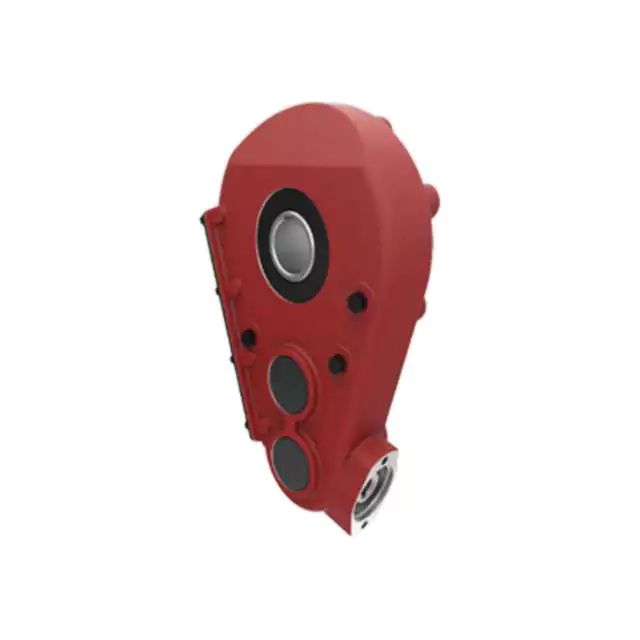
Technological Advancements in Agricultural Gearbox Design
Advancements in agricultural gearbox design have significantly improved the efficiency, durability, and performance of farming equipment. Here are some notable technological advancements:
- Materials and Manufacturing: The use of advanced materials, such as high-strength alloys and composite materials, has enhanced the durability and longevity of gearbox components. Precision manufacturing techniques, including computer-aided design (CAD) and computer numerical control (CNC) machining, ensure tight tolerances and reliable performance.
- Gear Tooth Design: Modern gear tooth profiles, such as optimized helical and spiral bevel gears, reduce noise, vibration, and wear. Advanced tooth design also improves power transmission efficiency and load distribution.
- Sealing and Lubrication: Improved sealing technologies, such as double-lip seals and labyrinth seals, help prevent contaminants from entering gearboxes while retaining lubricants. Advanced lubrication systems, including automatic lubrication and improved oil formulations, extend maintenance intervals and enhance efficiency.
- Electronic Controls: Agricultural gearboxes increasingly integrate with electronic control systems. Sensors and actuators provide real-time data on gearbox performance, allowing for condition monitoring, predictive maintenance, and adjustments to optimize machinery operation.
- Boîtes de vitesses intelligentes : Some agricultural gearboxes are equipped with smart features, such as load sensors, temperature monitors, and feedback systems. These features enhance precision, safety, and overall equipment performance.
- Hybrid Power Transmission: Integration of hybrid power transmission systems, combining internal combustion engines with electric motors, allows for more efficient power delivery and reduced fuel consumption. Gearboxes play a crucial role in managing power distribution in these systems.
- Reduced Environmental Impact: Advancements in gear design contribute to reducing environmental impact. Quieter and more efficient gearboxes minimize noise pollution and energy consumption while meeting emissions regulations.
- Customization and Modularity: Some modern agricultural gearboxes offer modular designs that allow farmers to customize gear ratios, output speeds, and other specifications to match specific tasks and conditions.
- Simulation and Testing: Computer simulations and advanced testing methods, such as finite element analysis (FEA) and computational fluid dynamics (CFD), help optimize gearbox design, reduce prototyping costs, and ensure reliability before production.
These advancements collectively contribute to the evolution of agricultural gearboxes, making farming machinery more efficient, environmentally friendly, and adaptable to the changing needs of modern agriculture.
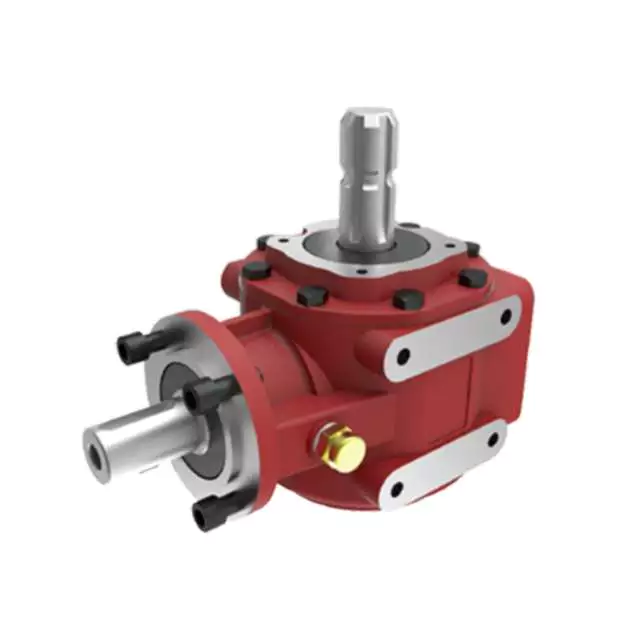
Enhancing Efficiency and Productivity in Farming Operations with Agricultural Gearboxes
Agricultural gearboxes play a pivotal role in enhancing efficiency and productivity across various farming operations. Here’s how agricultural gearboxes contribute to improving farming practices:
- Transmission de puissance : Agricultural gearboxes efficiently transmit power from the tractor’s engine to various implements, enabling them to perform tasks like plowing, planting, and harvesting with optimal power and torque.
- Variable Speed Control: Gearboxes allow farmers to adjust the speed of attached implements, adapting to different soil types, crop conditions, and tasks. This flexibility ensures precision and optimal performance.
- Task Specialization: With the use of different attachments and implements, one tractor equipped with a gearbox can perform a variety of tasks, reducing the need for multiple specialized machines.
- Optimized Torque: Agricultural gearboxes provide the necessary torque to overcome resistance from tough soils, vegetation, and other challenging conditions, ensuring consistent and efficient operations.
- Improved Crop Management: Gearboxes enable precise control over seeding depth, planting spacing, and fertilization, contributing to better crop management and higher yields.
- Reduced Operator Fatigue: Efficient power transmission and controlled operations reduce the physical strain on operators, enabling them to work longer hours without excessive fatigue.
- Conservation of Resources: By allowing accurate distribution of seeds, fertilizers, and other inputs, gearboxes help conserve resources and minimize waste.
- Enhanced Harvesting: Gearboxes facilitate smooth operation of harvesting equipment, such as combines and forage harvesters, resulting in efficient gathering of crops without damage.
- Time and Labor Savings: Agricultural gearboxes speed up tasks like plowing, tilling, and planting, enabling farmers to cover larger areas in less time, which is particularly crucial during planting and harvesting seasons.
- Reliability and Durability: Well-designed gearboxes are built to withstand the rigors of farming environments, reducing downtime due to maintenance or equipment failure.
Incorporating agricultural gearboxes into farming equipment significantly contributes to streamlining operations, reducing manual effort, and optimizing the use of resources. As a result, farmers can achieve higher levels of efficiency, productivity, and overall farm profitability.
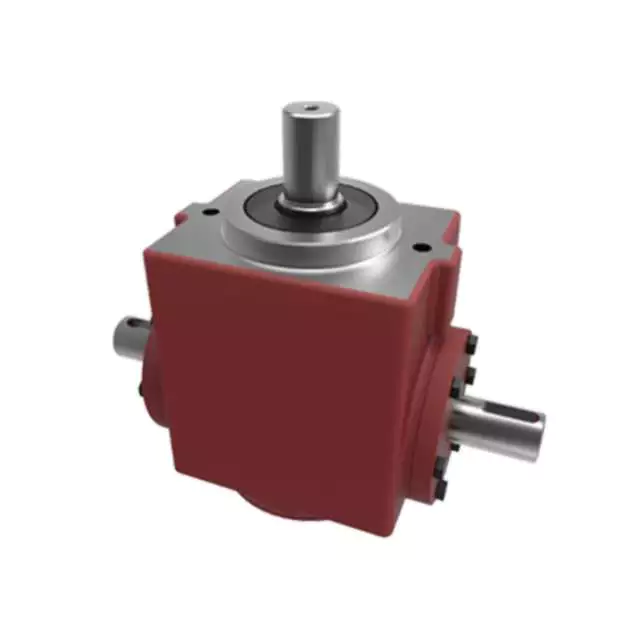
Contribution des boîtes de vitesses agricoles au fonctionnement des tracteurs
La boîte de vitesses agricole est un élément essentiel du système de transmission d'un tracteur. Elle joue un rôle primordial en permettant au tracteur d'effectuer une grande variété de tâches à la ferme. Le bon fonctionnement des tracteurs dépend fortement de celui de leurs boîtes de vitesses, qui assurent diverses fonctions essentielles :
- Transmission de puissance : Les tracteurs doivent fournir une puissance et un couple importants pour effectuer des tâches telles que le labour, le travail du sol et le transport. Les boîtes de vitesses agricoles transmettent la puissance du moteur du tracteur à ses roues ou à d'autres outils, permettant ainsi une transmission efficace de la puissance au sol.
- Contrôle de la vitesse : Les différentes tâches agricoles requièrent des vitesses différentes. Les boîtes de vitesses permettent aux opérateurs de contrôler la vitesse du tracteur en fonction des exigences de la tâche à accomplir. Qu'il s'agisse d'opérations à basse vitesse comme le labour ou de transports à grande vitesse, la boîte de vitesses assure les ajustements de vitesse nécessaires.
- Pièce jointe à l'implémentation : Les tracteurs sont souvent utilisés avec divers outils, tels que des charrues, des herses et des faucheuses. La boîte de vitesses facilite le raccordement et le fonctionnement de ces outils en transmettant la puissance et le couple du moteur du tracteur aux composants de l'outil.
- Changements de direction : Les boîtes de vitesses agricoles permettent aux tracteurs de changer de direction en douceur. Elles offrent le système d'engrenages nécessaire pour inverser le mouvement du tracteur, facilitant ainsi les manœuvres dans les exploitations, les champs et autour des obstacles.
- Adaptation au terrain : Les boîtes de vitesses agricoles permettent aux tracteurs de s'adapter aux différents types de terrains et de sols. En ajustant le rapport de transmission, les tracteurs peuvent optimiser leurs performances pour des tâches telles que la montée de pentes, le travail sur des terrains accidentés ou le remorquage de charges lourdes.
Les boîtes de vitesses agricoles modernes sont conçues pour offrir durabilité et fiabilité dans les conditions exigeantes du monde agricole. Elles sont souvent dotées de fonctionnalités telles que plusieurs vitesses, des mécanismes de synchronisation et des systèmes de lubrification performants afin d'optimiser leurs performances et leur durée de vie.
Un entretien régulier et des contrôles périodiques sont essentiels pour maintenir la boîte de vitesses agricole en parfait état. Une lubrification adéquate, l'inspection des engrenages et la réparation de tout signe d'usure ou de dommage contribuent à la longévité et au bon fonctionnement de la boîte de vitesses, garantissant ainsi la fonctionnalité du tracteur tout au long des saisons agricoles.


editor by CX 2023-10-20