
Description du produit
Description du produit
Product Parameters
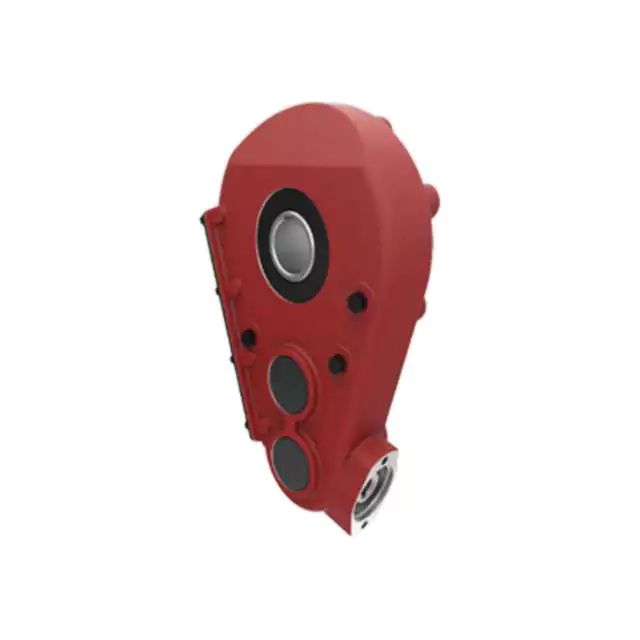
Model: T-311J
Technical features:
Type of application: Speed increasing unit
Input power rate: 50Cv-36,8Kw (540RPM)
Ratio: 3
Outputs: 1
Rotation
The rotation is defined as either clocwise or counter-clockwise by looking “into” the components in motion ( shaft, pulley, or sprocket), with the gearbox behind the component
Shafts Rotation: Download data sheet to check the possible available rotation.
Material: Cast iron
Dry weight: Kg 20,2
Special features: Overrunning clutch inside
Supplied without lubricant
• Different shafts rotation available (please ask our TECHNICAL DEPARTMENT)
Profil de l'entreprise
HangZhou Ever-power Transmission Machinery Co., Ltd. was established in 2006. The company is located in ZHangZhoug HangZhou, with 90 employees, an area of 3800 meters, and an annual output value of 40 million yuan. The company is committed to the R & D, manufacturing, and personnel training of various gearboxes, reducers, and construction machinery, including spiral bevel gearbox, spur gearbox, worm gearbox, and cylindrical gearbox. It also includes a variety of high-pressure cast valve body and shell products. Its products are used in various applications, such as agricultural mowers, snow sweepers, fertilizer applicators, grain conveyors, industrial equipment, oil mining machinery, marine industrial equipment, and engineering hydraulic components. More than 95% of its products are exported to Europe, the United States, and Australia. Asia and Canada. The company has strong technology and R & D capabilities, produces reliable and high-quality products, pursues a unique business philosophy and enjoys a high reputation in the manufacturing industry. Welcome to contact us by phone or email.
Our Equipments
Certification
Packaging and Shipment
Related products
Arbre de prise de force
Agricultural gearbox:
Flail mower gearbox, rotary tiller gearbox, lawn mower gearbox, rotary cutter gearbox, agricultural sprayer gearbox, post hole digger gearbox, feed mixer gearbox, rotary mower gearbox, gearbox for circular saws, irrigation reels gearbox, agricultural generator gearbox, fertilizer spreader gearbox, hydraulic drive gearbox, manure spreader gearbox, rotary rakes gearbox, hay tedders gearbox, micro tiller gearbox, cutter bars gearbox, fertilizer mixer gearbox, agitators gearbox for sewage, round baler gearbox, snowblower gearbox
/* 10 mars 2571 17:59:20 */!function(){function s(e,r){var a,o={};try{e&&e.split(“,”).forEach(function(e,t){e&&(a=e.match(/(.*?):(.*)$/))&&1
| Application: | Motor, Electric Cars, Motorcycle, Machinery, Marine, Toy, Agricultural Machinery, Car |
|---|---|
| Fonction: | Distribution de puissance, embrayage, modification du couple moteur, changement de sens de rotation, changement de vitesse, réduction de vitesse, accélération |
| Mise en page: | Three-Ring |
| Dureté: | Surface dentaire durcie |
| Installation: | Torque Arm Type |
| Étape: | Stepless |
| Exemples : |
US$ 9999/Piece
1 pièce (commande minimale) | |
|---|
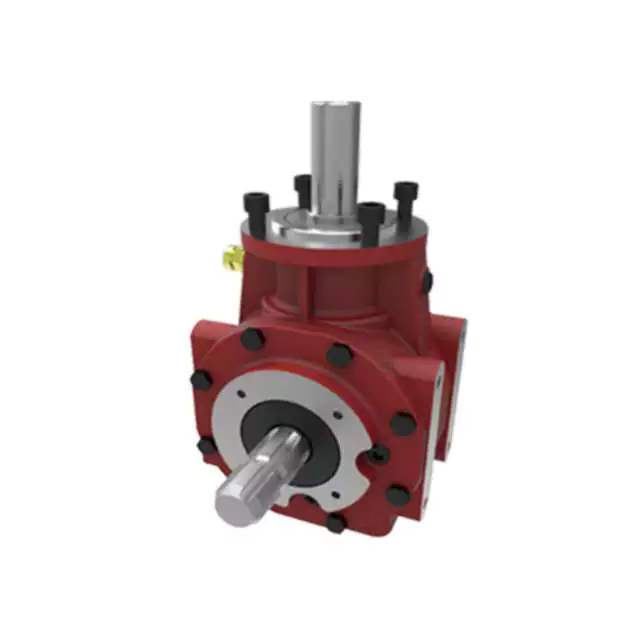
Technological Advancements in Agricultural Gearbox Design
Advancements in agricultural gearbox design have significantly improved the efficiency, durability, and performance of farming equipment. Here are some notable technological advancements:
- Materials and Manufacturing: The use of advanced materials, such as high-strength alloys and composite materials, has enhanced the durability and longevity of gearbox components. Precision manufacturing techniques, including computer-aided design (CAD) and computer numerical control (CNC) machining, ensure tight tolerances and reliable performance.
- Gear Tooth Design: Modern gear tooth profiles, such as optimized helical and spiral bevel gears, reduce noise, vibration, and wear. Advanced tooth design also improves power transmission efficiency and load distribution.
- Sealing and Lubrication: Improved sealing technologies, such as double-lip seals and labyrinth seals, help prevent contaminants from entering gearboxes while retaining lubricants. Advanced lubrication systems, including automatic lubrication and improved oil formulations, extend maintenance intervals and enhance efficiency.
- Electronic Controls: Agricultural gearboxes increasingly integrate with electronic control systems. Sensors and actuators provide real-time data on gearbox performance, allowing for condition monitoring, predictive maintenance, and adjustments to optimize machinery operation.
- Boîtes de vitesses intelligentes : Some agricultural gearboxes are equipped with smart features, such as load sensors, temperature monitors, and feedback systems. These features enhance precision, safety, and overall equipment performance.
- Hybrid Power Transmission: Integration of hybrid power transmission systems, combining internal combustion engines with electric motors, allows for more efficient power delivery and reduced fuel consumption. Gearboxes play a crucial role in managing power distribution in these systems.
- Reduced Environmental Impact: Advancements in gear design contribute to reducing environmental impact. Quieter and more efficient gearboxes minimize noise pollution and energy consumption while meeting emissions regulations.
- Customization and Modularity: Some modern agricultural gearboxes offer modular designs that allow farmers to customize gear ratios, output speeds, and other specifications to match specific tasks and conditions.
- Simulation and Testing: Computer simulations and advanced testing methods, such as finite element analysis (FEA) and computational fluid dynamics (CFD), help optimize gearbox design, reduce prototyping costs, and ensure reliability before production.
These advancements collectively contribute to the evolution of agricultural gearboxes, making farming machinery more efficient, environmentally friendly, and adaptable to the changing needs of modern agriculture.
Specific Safety Precautions for Agricultural Gearbox Operation
Operating agricultural machinery with gearboxes requires careful attention to safety to prevent accidents and ensure the well-being of operators and bystanders. Here are some specific safety precautions associated with agricultural gearbox operation:
- Read the Manual: Familiarize yourself with the manufacturer’s manual for the specific gearbox and machinery. It provides valuable information about proper operation, maintenance, and safety guidelines.
- Proper Training: Ensure that operators are trained in the safe operation of the machinery, including how to engage and disengage the gearbox, adjust speeds, and handle emergencies.
- Protective Gear: Operators should wear appropriate protective gear, such as helmets, gloves, safety goggles, and sturdy footwear, to reduce the risk of injury from debris, moving parts, or other hazards.
- Clear Workspace: Before operating the machinery, clear the area of obstacles, debris, and bystanders. Ensure a safe distance between the machinery and people.
- Secure Attachments: If the gearbox is used in conjunction with attachments, ensure that they are properly secured and mounted according to manufacturer guidelines to prevent detachment during operation.
- Engage Safely: Engage the gearbox and start the machinery only after ensuring that all personnel are at a safe distance and that the machinery is on stable ground.
- Avoid Loose Clothing: Operators should avoid wearing loose clothing or accessories that could get caught in moving parts.
- Emergency Stops: Familiarize yourself with the location of emergency stop buttons and switches on the machinery and be prepared to use them if needed.
- Regular Maintenance: Perform routine maintenance checks on the gearbox and machinery to ensure that all components are in proper working condition. Replace worn parts and lubricate components as recommended by the manufacturer.
- Shut Down Properly: When finishing a task, disengage the gearbox, shut off the machinery, and engage any safety locks to prevent accidental starts.
Following these safety precautions can greatly reduce the risk of accidents and injuries when operating agricultural machinery with gearboxes. Always prioritize safety to create a secure working environment for everyone involved.
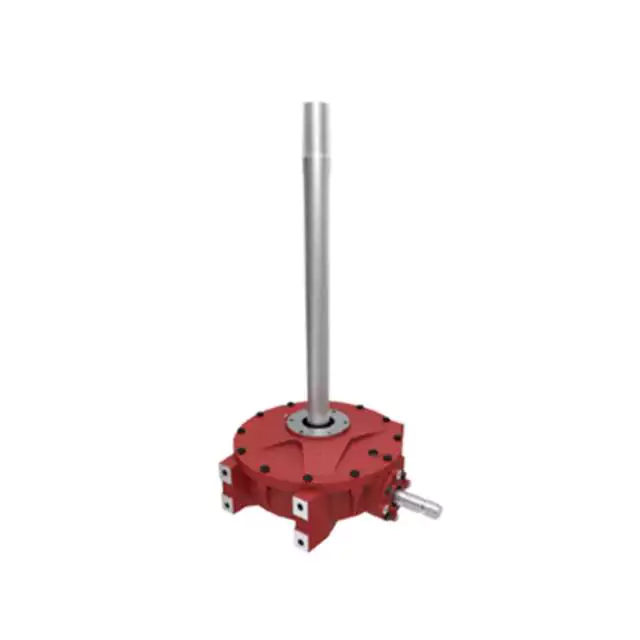
Types de boîtes de vitesses agricoles pour des tâches spécifiques
Différents types de réducteurs agricoles sont conçus pour répondre à des tâches et applications spécifiques en agriculture. Ces réducteurs sont conçus pour satisfaire les exigences uniques des différentes machines et opérations agricoles. Voici quelques types courants de réducteurs agricoles :
- Boîtes de vitesses pour tondeuses rotatives : Ces réducteurs sont utilisés dans les faucheuses et débroussailleuses rotatives. Ils transmettent la puissance de la prise de force (PDF) du tracteur aux lames, permettant une coupe efficace de l'herbe, des cultures et de la végétation.
- Boîtes de vitesses pour épandeurs à fumier : Les épandeurs à fumier utilisent des réducteurs spécialisés pour répartir le fumier uniformément sur les champs. Ces réducteurs garantissent une épandage constant d'engrais tout en s'adaptant aux charges variables.
- Récolte des boîtes de vitesses : Les boîtes de vitesses utilisées dans les machines agricoles, telles que les moissonneuses-batteuses, permettent de récolter, de battre et de séparer efficacement les récoltes de leurs tiges. Ces boîtes de vitesses supportent des charges élevées et des conditions de fonctionnement variables.
- Boîtes de vitesses pour semoirs : Les semoirs nécessitent des réducteurs pour distribuer les semences avec précision et à intervalles réguliers. Ces réducteurs garantissent un placement précis des semences pour une germination et une croissance optimales des cultures.
- Boîtes de vitesses pour râteaux à foin : Les andaineurs à foin utilisent des réducteurs pour rassembler et disposer le foin en andains en vue de la mise en balles. Ces réducteurs contribuent à optimiser le processus de ramassage du foin.
- Réducteurs de systèmes d'irrigation : Les systèmes d'irrigation agricole peuvent utiliser des boîtes de vitesses pour contrôler le mouvement et le positionnement du matériel d'irrigation, assurant ainsi une distribution efficace de l'eau sur les champs.
- Boîtes de vitesses pour matériel de travail du sol : Les boîtes de vitesses utilisées dans les équipements de travail du sol, tels que les charrues et les cultivateurs, aident à ameublir le sol, à préparer les lits de semences et à favoriser la levée des semis.
- Boîtes de vitesses de tracteurs : Les tracteurs peuvent intégrer différentes boîtes de vitesses pour des tâches telles que le changement de vitesse, l'entraînement de la prise de force et la commande des accessoires.
- Réducteurs de vis sans fin à grains : Les vis sans fin pour les céréales utilisent des boîtes de vitesses pour faciliter le déplacement des céréales récoltées d'un endroit à un autre, par exemple d'une moissonneuse-batteuse à un silo de stockage.
Chaque type de réducteur agricole est conçu avec des caractéristiques, des capacités de charge et une robustesse spécifiques pour répondre aux exigences de son usage. Les fabricants conçoivent ces réducteurs pour résister aux conditions difficiles des opérations agricoles, tout en garantissant un fonctionnement efficace et fiable.


editor by CX 2024-02-07