
Why the Beet Harvester Lifter/Scalper Gearbox Is the Cornerstone of Every Successful UK Sugar Beet Harvest
 Sugar beet harvesting remains one of the most mechanically intensive operations in British arable farming. Across key growing regions — Lincolnshire, Norfolk, Suffolk, East Yorkshire, and Nottinghamshire — the harvest window typically runs from September through to January, often through wet, heavily compacted soils that place extreme demands on every driven component working in the machine. At the very front end of every beet harvester sits a unit that most operators never inspect closely but can never afford to ignore: the lifter/scalper gearbox. This precision-engineered drive transmits power from the tractor or self-propelled harvester’s PTO input to two simultaneous working functions — the scalping rotor, which removes leaf tops and crown soil before the root enters the cleaning system, and the lifting assembly, which prises the beet cleanly and completely from the soil. When this beet harvester gearbox is correctly specified and properly maintained, roots enter the cleaner-loader free of excess tare, crowns are cut at a consistent height, and hourly throughput remains stable across the entire campaign. When it fails — through bearing collapse, oil seal breach, or gear surface fatigue — the consequences ripple through every downstream process, from elevator throughput to factory-gate deductions for soil contamination.
Ever Power has spent over eighteen years developing agricultural gearboxes specifically for demanding root crop harvesting applications. Our lifter/scalper gearbox range draws directly on field feedback from contractors and farm managers operating across the UK’s sugar beet growing belt. Every unit is built to defined torque ratings, sealed against the severe ingress conditions typical of British autumn and winter harvesting soils, and available in configurations that match the most widely used harvester platforms — as well as fully bespoke custom builds for OEM machinery manufacturers and specialist contracting businesses. This article sets out everything a UK purchaser, fleet manager, or workshop engineer needs to know before specifying or replacing a lifter/scalper gearbox for their beet harvesting equipment.
Ever Power Lifter/Scalper Gearbox — designed and tested for UK sugar beet harvesting conditions
How the Lifter/Scalper Gearbox Functions Inside a Modern Beet Harvester
 The lifter/scalper gearbox — sometimes referred to in the industry as the digging gearbox, crown-cut drive unit, or scalping transmission — performs a dual-output role within the front-end working assembly of both trailed and self-propelled beet harvesters. Power enters the unit through a splined input shaft driven directly by the machine’s PTO system, typically at 540 rpm or 1000 rpm depending on the harvester platform and installed power class. Inside the gearbox housing, a spiral bevel primary stage converts this rotary input through 90 degrees, directing torque downward and forward toward the working tools. The secondary transmission stage — which may be helical, spur, or planetary depending on the specific application and required output speeds — then splits this power precisely between the scalper shaft and the lifter drive shaft. The scalper output drives a horizontal rotor carrying replaceable blades or flails that trim the sugar beet crown flush to the root body while simultaneously knocking loose adhering soil. The lifter drive transmits torque to the share assembly — typically angled steel coulters or disc lifters positioned in front of each row — that sever lateral roots and lever the beet upward out of the soil. Both outputs must remain mechanically synchronised to prevent crown over-cutting, root cracking, or incomplete extraction. Speed ratios within the beet harvester gearbox are matched to the harvester’s forward working speed, typically 4–7 km/h, ensuring consistent beet extraction quality across the range of conditions encountered during a UK campaign.
The internal components of a properly engineered beet harvester lifter/scalper gearbox reflect the severity of the operating environment around a harvester front end. Input shafts are manufactured from case-hardened alloy steel — typically 20CrMnTi or 42CrMo4 to EN 10084 — to resist torsional fatigue under the shock loading that is a constant reality when lifting beets through stony, gravelly, or heavily compacted soils. Gear teeth are precision-ground to DIN 3960/3961 tolerances after heat treatment and case hardening to a surface hardness of HRC 58–62, ensuring quiet running and predictable, controllable wear patterns across extended campaign hours. Tapered roller bearings are specified at both shaft ends to manage the combined radial and axial loads generated by bevel gear mesh forces and the continuous vibration transmitted from the working tools through the gearbox housing. A multi-lip sealing system using PTFE-loaded rotary shaft seals prevents soil-laden water from tracking into the bearing housings — the primary failure route for inadequately sealed lifter/scalper gearboxes operating in Fenland conditions. The housing itself — most commonly cast from GJS-400 nodular iron — provides the structural rigidity needed to maintain precise gear alignment under continuous working loads without the bore distortion that affects inferior grey iron alternatives in shock-loaded applications.
Technical Specifications & Material Standards
The table below summarises the key engineering parameters for Ever Power’s lifter/scalper gearbox range for beet harvesters. Custom configurations — including modified gear ratios, alternative input speeds, extended oil capacities, adapted mounting flanges, and non-standard output shaft geometries — are available on request following a technical brief. All units are manufactured to ISO 6336 load-carrying capacity standards and leave the factory with a full test-stand run-in record and gear contact pattern verification report included with the unit documentation package.
Six Reasons UK Beet Growers and Contractors Specify Ever Power
From Holbeach to Bury St Edmunds, contractors running multi-row beet harvesters through challenging autumn campaigns have learned to look well beyond headline price when specifying gearbox replacements or OEM builds. Here is what sets our beet harvester lifter/scalper gearbox apart in practical field terms.
Shock-Load Engineered Gear Train
Beet lifting generates unpredictable torsional spikes — stones, compaction layers, root mats — that can exceed 2.5 times rated torque in a matter of milliseconds. Our gear train is designed with that safety factor built in at the drawing stage, not patched in as an aftermarket fix. Precision-ground tooth flanks and a correctly determined face width allow the gears to absorb transient overloads without tooth fracture, surface pitting, or micro-pitting fatigue — three of the most common failure modes affecting inferior lifter/scalper gearbox designs operating in UK harvesting conditions. Every gear set is inspected against contact pattern templates during production, not just at final assembly, catching misalignment before it translates into premature wear.
IP65 Soil & Moisture Exclusion
The working environment around a beet harvester front end is arguably the harshest in arable farming — high-velocity soil particles expelled by the scalper rotor, water jetting from freshly cut crowns, continuous vibration transmitted through the chassis, and prolonged exposure to muddy field conditions lasting days or weeks. Our multi-lip PTFE sealing system, combined with precision bored housings held to H7 tolerance, delivers IP65 ingress protection in independent testing. That translates directly into service life: no premature bearing failure from contaminated lubricant, no shaft corrosion under the seal contact band, and no unexplained oil loss during a long East Yorkshire or Norfolk campaign week. Where competitor seals fail in six to eight weeks, ours routinely complete a full UK harvest season without replacement.
Direct OEM Interchange Compatibility
Downtime during the UK sugar beet campaign is not measured in hours — it is measured in tonnes of root lying in the field and in contractual penalties with British Sugar. Our lifter/scalper gearboxes are dimensionally matched to the mounting flanges and splined shaft interfaces of Holmer Terra Dos T3 and T4, ROPA Euro Tiger V8 and Tiger 6, and Grimme Rootster 604 and 624 front-end assemblies. In most cases, replacement is bolt-on with no adaptation plates, modified brackets, or machined spacers required. That is a critical advantage when a gearbox fails during week four of the harvest and the next field is waiting two fields away. We confirm interchange fit before any order is placed — never after.
Ratio Flexibility for Multi-Row Configurations
A six-row self-propelled harvester running at 7 km/h requires a very different scalper rotor tip speed from a three-row trailed machine working at 4 km/h. Specify the wrong ratio and you will either over-cut crowns — producing excessive top waste and increased tare — or under-cut them, leaving leaf material that clogs the elevator and cleaner system. Our range covers gear ratios from 1:1.2 through to 1:3.8, and our engineering team will confirm the correct selection from your harvester’s working width, share pitch, scalper blade radius, and intended forward speed range. This application-engineering step is included in the quotation process — not charged as a separate consultancy service.
Campaign-Ready Parts & Service Kits
We do not just supply gearboxes — we stock the service consumables that allow UK workshops to rebuild them cost-effectively: shaft seal sets, tapered roller bearing packs, shim kits, oil fill and drain hardware, all grouped as model-keyed service bundles. UK contractors working through the pressure of harvest have told us directly that twelve-week factory lead times for service parts are not acceptable when a machine needs to be back in the field within two days. We hold buffer stock of the highest-turnover items and offer airfreight for campaign-critical orders anywhere in mainland Britain, with same-day despatch available for in-stock parts placed before midday.
Full Traceability & Test Documentation
Every gearbox despatched from our facility carries a serial number linked to material batch certificates, a gear contact pattern verification report, and the test-stand run-in record generated under controlled load and speed conditions. For UK businesses operating under ISO 9001 quality management or supplying into British Sugar’s approved contractor programmes, this documentation package is provided as standard — not priced separately or available only on request. When a warranty question arises, our records support a full investigation without ambiguity. Material traceability to BS EN 10083 and gear geometry verification to DIN 3961 tolerance class are documented for every production unit, not spot-checked by batch.
Application Scenarios: Where the Beet Harvester Lifter/Scalper Gearbox Performs
The lifter/scalper gearbox is not a universal commodity component whose performance is independent of its operating context. What it must deliver is shaped by the machine it drives, the crop variety it handles, and the ground conditions it encounters season after season. The following deployment scenarios reflect the range of applications where Ever Power agricultural gearboxes are routinely specified by UK buyers and international customers alike.
🌿 Self-Propelled 6-Row Harvesters
Large-scale contractors operating Holmer Terra Dos T4-40 or ROPA Euro Tiger platforms across Lincolnshire and Norfolk use our highest-torque lifter/scalper variants, rated to 2,200 N·m input with a 2.5x shock factor. These units sustain combined lifting and scalping demands across a six-row front at working speeds up to 7 km/h without thermal saturation, even during extended daily campaigns of sixteen to eighteen hours that are routine in British sugar beet country during October and November.
🚗 Trailed 3-Row Farm-Scale Machines
Farm-scale and smaller contracting businesses using trailed three-row units behind 180–250 hp tractors are one of the most commercially active segments in the UK replacement gearbox market. Our mid-range lifter/scalper gearbox addresses this application with a compact housing profile, integrated oil bath lubrication sized for seasonal drain intervals, and a bolt pattern compatible with the most widely used trailed harvester frames currently operating in British sugar beet regions.
🛠 OEM New Machine Development
Agricultural machinery manufacturers building new beet harvesting platforms — particularly for specialist markets such as organic beet, seed beet, or reduced-disturbance harvesting — require gearboxes engineered to their specific output shaft locations, working ratios, and structural mounting. Ever Power’s engineering team works from initial CAD review through prototype testing to series supply, including CE machinery directive documentation for the UK and European markets.
⚡ High-Volume Factory Supply Operations
Contractors supplying British Sugar’s factories at Bury St Edmunds, Wissington, Newark, and Cantley operate under tight daily delivery tonnage commitments. A lifter/scalper gearbox failure on a key harvesting unit translates directly into missed tonne commitments and contractual consequences. Our pre-positioned stock levels, documented interchange compatibility, and rapid despatch model are designed around this operational and commercial reality.
PTO Shafts: The Critical Power Link Between Your Tractor and the Beet Harvester Gearbox
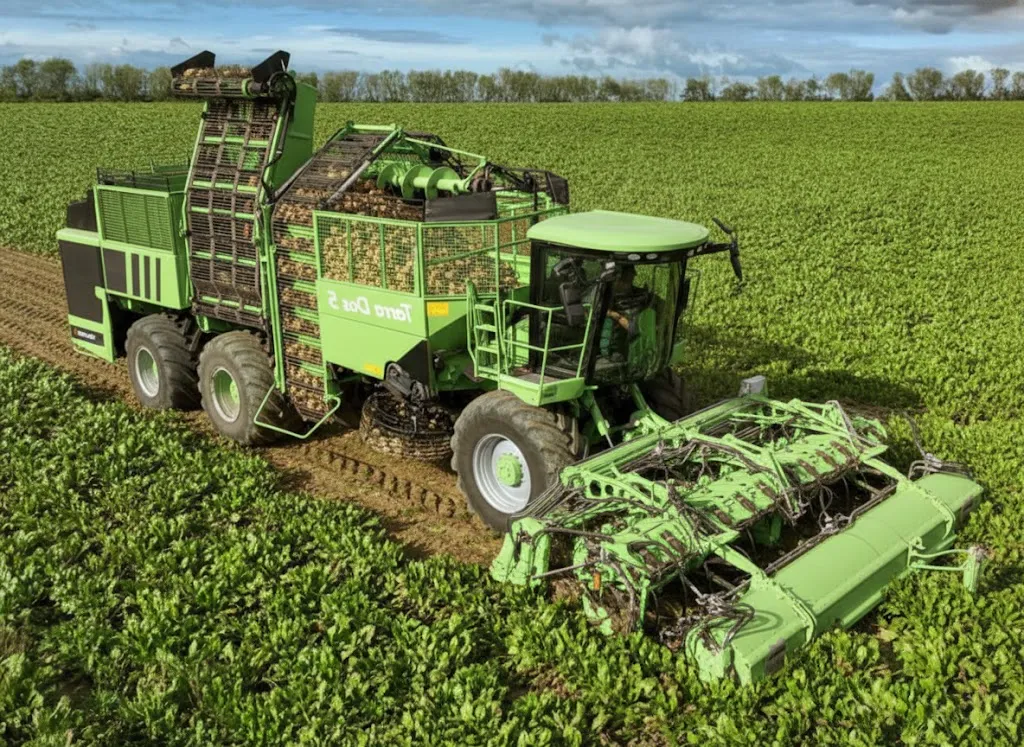 A correctly specified beet harvester lifter/scalper gearbox can only perform to its rated torque capacity if the power reaching its input shaft is delivered cleanly, within angular tolerance, and with adequate overload protection between the driving machine and the gearbox input. This is precisely why Ever Power supplies matched PTO shafts alongside our agricultural gearbox range — because the two components function as an interdependent drive system, not a pair of independent parts that happen to be connected. The PTO shaft must handle the same peak torque envelope as the gearbox input, accommodate the angular misalignment between tractor output stub and harvester input shaft during headland turns and field undulations, and provide the shear-bolt or friction clutch protection that prevents catastrophic gearbox damage when the working tools strike a buried stone, steel fragment, or immovable root mat. Our PTO shaft range for beet harvester applications includes wide-angle constant-velocity joints for machines requiring articulation angles beyond the capability of standard cross-shaft designs, reinforced profile tube assemblies rated to match our gearbox torque classes precisely, and profile tube cross-section options — lemon, star, and triangular profiles — matched to the power and torque levels of each application. When you enquire about a lifter/scalper gearbox from Ever Power, our applications engineers will confirm the correct PTO shaft specification at the same time, so your drive train functions as a properly matched, coherent system from the first hour of the harvest campaign rather than discovering incompatibilities in the field.
Capacidade de fabricação e serviços de engenharia personalizados
Ever Power operates a dedicated caixa de engrenagens agrícola manufacturing facility equipped with CNC gear hobbing and grinding centres producing to DIN 3961 tolerance, coordinate measuring machines (CMM) for full in-process dimensional verification against drawing, and a dedicated load test bay capable of running production units at rated torque and maximum speed before despatch. Our production output across the beet harvester gearbox range — including all lifter/scalper variants — exceeds 3,000 units annually at peak throughput, with the scheduling flexibility to prioritise campaign-critical orders during the UK harvest season when customer lead time pressure is highest and standard delivery windows are not acceptable.
The customisation capability that distinguishes Ever Power from generic gearbox distributors covers every engineering parameter that matters in a beet harvester application: housing geometry and wall thickness, output shaft location and orientation, gear ratio, bearing type and preload, sealing arrangement and seal material, surface treatment — including hot-dip galvanising, epoxy primer, or agricultural-grade topcoat — and oil specification. OEM customers developing new harvester platforms can engage our engineering team under a non-disclosure agreement from the concept stage onward, with 3D model exchange in STEP or DXF format, finite element structural analysis of the housing, and prototype build timelines quoted on a project-specific basis. Small-batch custom production runs — starting from ten units — are fully supported without the minimum order volume restrictions imposed by larger transmission manufacturers who treat agricultural gearboxes as a secondary product line.
Custom Build Capabilities
- Gear ratio selection 1:1 through 1:6
- Input/output shaft redesign to OEM interface
- Custom housing geometry & mounting flanges
- Extended-life bearing upgrade packages
- Alternative seal specifications for extreme ingress
- Surface: galvanised, powder-coated, epoxy
- CE machinery directive documentation
- 3D model exchange: STEP, DXF, PDF format
- Prototype from 1 unit; series from 10 units
- NDA-protected OEM development partnership
- Oil specification and fill quantity confirmation
- Full batch traceability to BS EN 10083
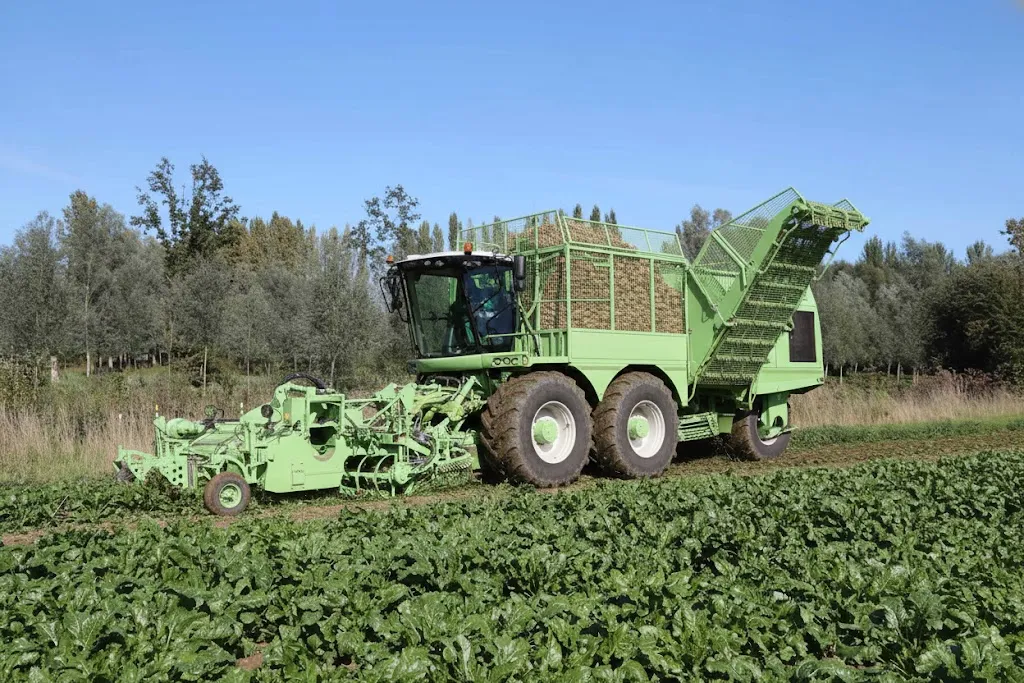
Customer Results: Beet Harvester Gearbox Performance in UK & European Operations
The case study below and the contractor testimonials that follow it show what real campaign performance looks like when a correctly specified lifter/scalper gearbox is deployed in a demanding commercial beet harvesting operation.
Case Study | Lincolnshire, United Kingdom
Fenland Sugar Beet Contractor Eliminates Mid-Campaign Gearbox Failures Across 2,800-Hectare Operation
A family-owned contracting business based in the South Holland district of Lincolnshire — operating two self-propelled six-row beet harvesters serving fourteen farm clients across the Fens — had experienced three separate lifter/scalper gearbox failures over two consecutive harvest campaigns using a different gearbox supplier. Each failure occurred between weeks three and five of the season, precisely the period when field conditions are most demanding and machine utilisation is at its peak. Lost harvesting time across the two campaigns totalled sixty-three hours, representing approximately 4,400 tonnes of unharvested beet left in the field during the British Sugar delivery window, with significant contractual and financial consequences for both the contractor and their farm clients.
Switching to Ever Power from the 2022 season onward, the business replaced both front-end beet harvester gearboxes with our matched lifter/scalper units — torque-rated to their six-row configuration and specified for 1000 rpm PTO input. A matched pair of wide-angle CV-joint PTO shafts with friction clutch protection was supplied simultaneously. The result across two subsequent complete harvest campaigns: zero gearbox-related stoppages, an 18% measured reduction in lubricant consumption compared to the previous supplier’s units, and a verified improvement in beet crown-cut consistency that reduced tare deductions at the Lincolnshire factory by an average of 0.3 percentage points per delivered load.
0
Gearbox failures across 2 campaigns
63h
Downtime recovered vs. prior supplier
-0.3%
Soil tare deduction per load
-18%
Lubricant consumption reduction
“
We run a Grimme Rootster through some of the heaviest soils in East Yorkshire, and the previous gearbox simply could not sustain the combined lifting and scalping loads without overheating by week three. The Ever Power unit completed our entire twelve-week campaign without a single interruption. The PTO shaft specification they recommended at the point of order was exactly right — zero driveline vibration through the full speed range.
— Head of Operations, Agricultural Contracting Business
East Yorkshire, United Kingdom
“
As an OEM developing a specialist seed beet harvester, we needed a lifter/scalper gearbox with a very specific output shaft geometry and a reduced ratio to match our lower working speed. Ever Power’s engineering team turned around design drawings inside a week, had a prototype unit with us in six weeks, and the production series has been completely reliable across two harvests. Their CE marking documentation package was exactly what our CE assessment required.
— Technical Director, Agricultural Machinery Manufacturer
Cambridgeshire, United Kingdom
“
I manage procurement for a sugar beet cooperative in the Netherlands and we were looking for an alternative gearbox supplier after consistency issues with our previous source. Ever Power’s pricing was competitive, but what convinced us was the documentation — every unit arrives with a run-in report and gear contact pattern verification. That level of traceability is non-negotiable for our member farms operating under quality certification.
— Procurement Manager, Sugar Beet Cooperative
Groningen, Netherlands
Perguntas frequentes
Questions UK contractors, farm managers, procurement teams, and OEM engineers ask us most often about beet harvester lifter/scalper gearboxes, custom builds, and our supply model.
What is the typical cost and delivery lead time for a replacement lifter scalper gearbox for a UK beet harvester, and can I get an emergency quote during harvest season?
Pricing for a lifter/scalper gearbox replacement unit depends on the torque class, output configuration, and whether the unit is a standard interchange or a custom-modified specification. Standard replacement units for trailed three-row harvesters sit in the mid-range bracket, while six-row self-propelled variants carry a higher price reflecting their rated torque capacity and more complex internal architecture. Lead time for standard catalogue units held in our pre-positioned stock is typically three to seven working days for UK delivery. During the active UK harvest campaign — September to January — we operate an expedited handling queue and can provide firm price and lead time on the same day as enquiry for in-stock units. Custom-specified units require a lead time discussion based on the modification scope; many ratio and flange changes are completed within three to four weeks from drawing approval. Send your harvester model, OEM gearbox part number, and campaign timing to [email protected] and we will respond within four working hours.
Which beet harvester brands does Ever Power’s lifter scalper gearbox replace directly without modification, and how do I confirm the right fit before ordering?
Our standard lifter/scalper gearbox range includes verified interchange fits for Holmer Terra Dos T3 and T4 series, ROPA Euro Tiger V8 and Tiger 6, and Grimme Rootster 604 and 624 front-end assemblies — the three platforms most commonly operated by UK sugar beet contractors and farm businesses. For Agrifac Hexx and WM Cropcutter platforms, our engineering team can confirm compatibility following a brief specification exchange. We ask for the machine model, year of manufacture, and ideally the OEM gearbox part number from the original parts catalogue — this allows us to cross-reference against our interchange drawing library and confirm dimensional match before any order is confirmed. We never ask a customer to discover a compatibility issue during workshop installation.
How do I recognise the early warning signs that my beet harvester gearbox is about to fail before it causes a complete breakdown during the UK harvest campaign?
Early warning signs of lifter/scalper gearbox deterioration are identifiable well before catastrophic failure if you know what to monitor during daily pre-start checks. Cyclic grinding or intermittent whining that changes in pitch with PTO speed typically indicates bearing or gear surface fatigue rather than external contamination. Oil leakage around shaft seal areas — particularly at the scalper output shaft where soil contact is highest — points to lip seal wear or shaft corrosion beneath the seal contact band. Excessive housing temperature detected during or immediately after a work shift, by touch or thermal camera, suggests inadequate lubrication or internal friction from misalignment. Changes in crown-cut quality — inconsistent topping heights or unexplained beet surface damage — can indicate output shaft bearing play or gear backlash beyond the design tolerance. We recommend a structured pre-season inspection covering oil drain and gear contact pattern visual check, bearing axial play measurement, and seal area inspection for micro-leakage. Contact our technical team for a model-specific diagnostic checklist.
Can Ever Power supply a custom beet harvester lifter gearbox with a non-standard gear ratio for a specialist slow-speed seed beet harvesting operation in the UK, and what information do you need?
Yes — non-standard gear ratio specification is among the most frequent custom requests we handle for UK buyers. Seed beet harvesting typically proceeds at forward speeds of 2.5–4 km/h, and the scalper rotor tip speed needed to cut cleanly at those lower forward velocities is substantially different from standard sugar beet harvesting. We calculate the required ratio from your forward speed range, scalper blade tip radius, and target tip speed, then confirm the gear modification required. Depending on the centre distance and module of the existing gear stage, this may involve a replacement gear pair within the current housing or a complete housing redesign for larger ratio changes. Our engineering team will give you an honest, quantified assessment of both options and their respective costs. To begin, send us your working speed range, scalper blade diameter, and target tip speed in m/s to [email protected].
What PTO shaft specification should I order alongside a new lifter scalper gearbox for a trailed beet harvester operating on heavy Fenland soils in Lincolnshire?
The correct PTO shaft specification depends on three primary parameters: the torque class matching the gearbox input rating, the operating length and telescoping range between the tractor PTO output stub and the harvester input shaft flange, and the maximum articulation angle the combination encounters during headland turns and field undulations. For trailed harvesters on Fenland ground — where field surfaces are typically level but headland turns can be tight — we typically recommend wide-angle CV-joint PTO shafts with shear-bolt overrun protection rated to match the gearbox shock load envelope rather than the mean drive torque. Providing the tractor drawbar-to-harvester input distance and the maximum turning angle allows us to specify shaft length, profile tube cross-section, and protection class precisely. We send this confirmation as part of the gearbox quotation so you have both components specified correctly before ordering.
Where can UK procurement managers find a reliable agricultural gearbox supplier for beet harvesters that provides technical documentation and can support CE compliance?
Reliable sourcing of beet harvester gearboxes for UK procurement requires a supplier who combines genuine engineering capability with commercial responsiveness — two qualities not always found together in the agricultural aftermarket. Ever Power serves the UK market directly through agriculturalgearboxes.top, supplying lifter/scalper gearboxes with full technical documentation including material batch certificates to BS EN 10083, gear contact pattern verification reports, and ISO 6336-compliant load calculation data. For OEM buyers requiring CE machinery directive support, we supply technical files and declarations of conformity for the gearbox as a sub-assembly. Our technical team handles UK enquiries in English with response times typically inside four working hours during the European business day. Contact us at [email protected] with your requirement and we will respond with a specification proposal rather than a generic catalogue link.
How does a beet harvester lifter scalper gearbox differ technically from a standard agricultural right-angle gearbox, and why does that difference matter when choosing a supplier?
A generic agricultural right-angle gearbox and a beet harvester lifter/scalper gearbox share some basic similarities — both use bevel gears to redirect rotary power through 90 degrees — but the operating demands diverge completely beyond that point. The lifter/scalper gearbox must manage dual-output power splitting to two mechanically interdependent working tools that must remain synchronised relative to each other and to the harvester’s forward speed simultaneously. The shock loading profile in a beet lifting application is orders of magnitude more severe than a typical implement drive, with instantaneous torque spikes generated by stones, compaction layers, or root mats reaching well above the mean drive torque in milliseconds. The sealing requirement is far higher because the housing operates in a zone of concentrated soil and water particle exposure. Specifying a generic right-angle gearbox as a substitute — or choosing a supplier who treats beet harvester units as a minor variant within a generic range — carries real engineering risk that becomes a commercial problem when the unit fails mid-campaign. Application-specific design is not a marketing description in this context; it determines whether the gearbox completes the UK harvest season.