
Description du produit
Details Photos:
1.It is equipped with an angular contact ball bearing, so it can support the external load with the rigid moment and large allowable moment
2.Easy assemble, small vibration
3.It can reduce the motor straight junction (input gear) and inertia
4.Large torsional rigidity
5.Strong impact resistance (500% of rated torque)
6.The crankshaft is supported by 2 columns in the reducer
7.Excellent starting efficiency & Small wear and long service life
8.Small backlash (1arc. Min.) & Use rolling bearing
9.Strong impact resistance (500% of rated torque)
10.The number of simultaneous engagements between RV gear and needle teeth is large
Advantages:
1. High precision, high torque
2. Dedicated technical personnel can be on the go to provide design solutions
3. Factory direct sales fine workmanship durable quality assurance
4. Product quality issues have a one-year warranty time, can be returned for replacement or repair
Company profile:
HangZhou CZPT Technology Co., Ltd. was established in 2014. Based on long-term accumulated experience in mechanical design and manufacturing, various types of harmonic reducers have been developed according to the different needs of customers. The company is in a stage of rapid development. , Equipment and personnel are constantly expanding. Now we have a group of experienced technical and managerial personnel, with advanced equipment, complete testing methods, and product manufacturing and design capabilities. Product design and production can be carried out according to customer needs, and a variety of high-precision transmission components such as harmonic reducers and RV reducers have been formed; the products have been sold in domestic and global(Such as USA, Germany, Turkey, India) and have been used in industrial robots, machine tools, medical equipment, laser processing, cutting, and dispensing, Brush making, LED equipment manufacturing, precision electronic equipment, and other industries have established a good reputation.
In the future, Hongwing will adhere to the purpose of gathering talents, keeping close to the market, and technological innovation, carry CZPT the value pursuit in the field of harmonic drive&RV reducers, seek the common development of the company and the society, and quietly build itself into a CZPT brand with independent intellectual property rights. Quality supplier in the field of precision transmission”.
Strength factory:
Our plant has an entire campus The number of workshops is around 300 Whether it’s from the production of raw materials and the procurement of raw materials to the inspection of finished products, we’re doing it ourselves. There is a complete production system
Parameter:
| Rated Table | ||||||||||||||
| Output rotational speed (rpm) | 5 | 10 | 15 | 20 | 25 | 30 | 40 | 50 | 60 | |||||
| Model | Speed ratio code | Transmission Ratio(R) | Output Torque (Nm) / Enter the capacity (kW |
|||||||||||
| Rotation of axes | Housing rotation | |||||||||||||
| RV-6E | 31 | 31 | 30 | 101 / 0.07 |
81 / 0.11 |
72 / 0.15 |
66 / 0.19 |
62 / 0.22 |
58 / 0.25 |
54 / 0.30 |
50 / 0.35 |
47 / 0.40 |
||
| 43 | 43 | 42 | ||||||||||||
| 53.5 | 53.5 | 52.5 | ||||||||||||
| 59 | 59 | 58 | ||||||||||||
| 79 | 79 | 78 | ||||||||||||
| 103 | 103 | 102 | ||||||||||||
| RV-20E | 57 | 57 | 56 | 231 / 0.16 |
188 / 0.26 |
167 / 0.35 |
153 / 0.43 |
143 / 0.50 |
135 / 0.57 |
124 / 0.70 |
115 / 0.81 |
110 / 0.92 |
||
| 81 | 81 | 80 | ||||||||||||
| 105 | 105 | 104 | ||||||||||||
| 121 | 121 | 120 | ||||||||||||
| 141 | 141 | 140 | ||||||||||||
| 161 | 161 | 160 | ||||||||||||
| RV-40E | 57 | 57 | 56 | 572 / 0.40 |
465 / 0.65 |
412 / 0.86 |
377 / 1.05 |
353 / 1.23 |
334 / 1.40 |
307 / 1.71 |
287 / 2.00 |
271 / 2.27 |
||
| 81 | 81 | 80 | ||||||||||||
| 105 | 105 | 104 | ||||||||||||
| 121 | 121 | 120 | ||||||||||||
| 153 | 153 | 152 | ||||||||||||
| RV-80E | 57 | 57 | 56 | 1,088 / 0.76 |
885 / 1.24 |
784 / 1.64 |
719 / 2.01 |
672 / 2.35 |
637 / 2.67 |
584 / 3.26 |
546 / 3.81 |
517 / 4.33 |
||
| 81 | 81 | 80 | ||||||||||||
| 101 | 101 | 100 | ||||||||||||
| 121 | 121 | 120 | ||||||||||||
| 153 | 1(153) | 1(152) | ||||||||||||
| RV-110E | 81 | 81 | 80 | 1,499 / 1.05 |
1,215 / 1.70 |
1,078 / 2.26 |
990 / 2.76 |
925 / 3.23 |
875 / 3.67 |
804 / 4.49 |
||||
| 111 | 111 | 110 | ||||||||||||
| 161 | 161 | 160 | ||||||||||||
| 175 | 1227/7 | 1220/7 | ||||||||||||
| RV-160E | 81 | 81 | 80 | 2,176 / 1.52 |
1,774 / 2.48 |
1,568 / 3.28 |
1,441 / 4.02 |
1,343 / 4.69 |
1,274 / 5.34 |
|||||
| 101 | 101 | 100 | ||||||||||||
| 129 | 129 | 128 | ||||||||||||
| 145 | 145 | 144 | ||||||||||||
| 171 | 171 | 170 | ||||||||||||
| RV-320E | 81 | 81 | 80 | 4,361 / 3.04 |
3,538 / 4.94 |
3,136 / 6.57 |
2,881 / 8.05 |
2,695 / 9.41 |
2,548 / 10.7 |
|||||
| 101 | 101 | 100 | ||||||||||||
| 118.5 | 118.5 | 117.5 | ||||||||||||
| 129 | 129 | 128 | ||||||||||||
| 141 | 141 | 140 | ||||||||||||
| 171 | 171 | 170 | ||||||||||||
| 185 | 185 | 184 | ||||||||||||
| RV-450E | 81 | 81 | 80 | 6,135 / 4.28 |
4,978 / 6.95 |
4,410 / 9.24 |
4,047 / 11.3 |
3,783 / 13.2 |
||||||
| 101 | 101 | 100 | ||||||||||||
| 118.5 | 118.5 | 117.5 | ||||||||||||
| 129 | 129 | 128 | ||||||||||||
| 154.8 | 2013/13 | 2000/13 | ||||||||||||
| 171 | 171 | 170 | ||||||||||||
| 192 | 1347/7 | 1340/7 | ||||||||||||
| Note: 1. The allowable output speed is affected by duty cycle, load, and ambient temperature. When the allowable output speed is above NS1, please consult our company about the precautions. 2. Calculate the input capacity (kW) by the following formula. |
||||||||||||||
| Input capacity (kW) =(2π*N*T)/(60*η/100*10*10*10) | N: output speed (RPM) T: output torque (nm) η = 75: reducer efficiency (%) |
|||||||||||||
| The input capacity is the reference value. 3. When using the reducer at a low temperature, the no-load running torque will increase, so please pay attention when selecting the motor. (refer to p.93 low-temperature characteristics) |
||||||||||||||
| T0 Rated torque(Remark .7) |
N0 Rated output speed |
K Rated life |
TS1 Allowable starting and stopping torque |
TS2 Instantaneous maximum allowable torque |
NS0 Allowable maximum output speed (Remark .1) |
Contrecoup | Empty distance MAX. | Angle transmission error MAX. | A representative value of starting efficiency | MO1 Allowable moment (Remark .4) |
MO2 Instantaneous maximum allowable moment |
Wr Allowable radial load (Remark .10) |
I Converted value of inertia moment input shaft (Remark .5) |
Poids |
| (Nm) | (rpm) | (h) | (Nm) | (Nm) | (r/min) | (arc.sec.) | (arc.min.) | (arc.sec.) | (%) | (Nm) | (Nm) | (N) | (kgm2) | (kg) |
| 58 | 30 | 6,000 | 117 | 294 | 100 | 1.5 | 1.5 | 80 | 70 | 196 | 392 | 2,140 | 2.63×10⁻⁶ | 2.5 |
| 2.00×10⁻⁶ | ||||||||||||||
| 1.53×10⁻⁶ | ||||||||||||||
| 1.39×10⁻⁶ | ||||||||||||||
| 1.09×10⁻⁶ | ||||||||||||||
| 0.74×10⁻⁶ | ||||||||||||||
| 167 | 15 | 6,000 | 412 | 833 | 75 | 1.0 | 1.0 | 70 | 75 | 882 | 1,764 | 7,785 | 9.66×10⁻⁶ | 4.7 |
| 6.07×10⁻⁶ | ||||||||||||||
| 4.32×10⁻⁶ | ||||||||||||||
| 3.56×10⁻⁶ | ||||||||||||||
| 2.88×10⁻⁶ | ||||||||||||||
| 2.39×10⁻⁶ | ||||||||||||||
| 412 | 15 | 6,000 | 1,571 | 2,058 | 70 | 1.0 | 1.0 | 60 | 85 | 1,666 | 3,332 | 11,594 | 3.25×10⁻⁵ | 9.3 |
| 2.20×10⁻⁵ | ||||||||||||||
| 1.63×10⁻⁵ | ||||||||||||||
| 1.37×10⁻⁵ | ||||||||||||||
| 1.01×10⁻⁵ | ||||||||||||||
| 784 | 15 | 6,000 | 1,960 | Bolt tightening 3920 | 70 | 1.0 | 1.0 | 50 | 85 | Bolt fastening 2156 | Bolt tightening | Bolt tightening 12988 | 8.16×10⁻⁵ | Bolt tightening 13.1 |
| 6.00×10⁻⁵ | ||||||||||||||
| 4.82×10⁻⁵ | ||||||||||||||
| Pin combination 3185 | Pin combination 1735 | Pin combination 2156 | Pin combination 1571 | Pin combination 12.7 | ||||||||||
| 3.96×10⁻⁵ | ||||||||||||||
| 2.98×10⁻⁵ | ||||||||||||||
| 1,078 | 15 | 6,000 | 2,695 | 5,390 | 50 | 1.0 | 1.0 | 50 | 85 | 2,940 | 5,880 | 16,648 | 9.88×10⁻⁵ | 17.4 |
| 6.96×10⁻⁵ | ||||||||||||||
| 4.36×10⁻⁵ | ||||||||||||||
| 3.89×10⁻⁵ | ||||||||||||||
| 1,568 | 15 | 6,000 | 3,920 | Bolt tightening 7840 | 45 | 1.0 | 1.0 | 50 | 85 | 3,920 | Bolt tightening 7840 | 18,587 | 1.77×10⁻⁴ | 26.4 |
| 1.40×10⁻⁴ | ||||||||||||||
| 1.06×10⁻⁴ | ||||||||||||||
| Pin and use 6615 | Pin and use 6762 | |||||||||||||
| 0.87×10⁻⁴ | ||||||||||||||
| 0.74×10⁻⁴ | ||||||||||||||
| 3,136 | 15 | 6,000 | 7,840 | Bolt tightening 15680 | 35 | 1.0 | 1.0 | 50 | 80 | Bolt tightening 7056 | Bolt tightening 14112 | Bolt tightening 28067 | 4.83×10⁻⁴ | 44.3 |
| 3.79×10⁻⁴ | ||||||||||||||
| 3.15×10⁻⁴ | ||||||||||||||
| 2.84×10⁻⁴ | ||||||||||||||
| Pin combination 12250 | Pin combination 6174 | Pin and use 1571 | Pin combination 24558 | |||||||||||
| 2.54×10⁻⁴ | ||||||||||||||
| 1.97×10⁻⁴ | ||||||||||||||
| 1.77×10⁻⁴ | ||||||||||||||
| 4,410 | 15 | 6,000 | 11,571 | Bolt tightening 22050 | 25 | 1.0 | 1.0 | 50 | 85 | 8,820 | Bolt tightening 17640 | 30,133 | 8.75×10⁻⁴ | 66.4 |
| 6.91×10⁻⁴ | ||||||||||||||
| 5.75×10⁻⁴ | ||||||||||||||
| 5.20×10⁻⁴ | ||||||||||||||
| Pin and use 18620 | Pin and use 13524 | |||||||||||||
| 4.12×10⁻⁴ | ||||||||||||||
| 3.61×10⁻⁴ | ||||||||||||||
| 3.07×10⁻⁴ | ||||||||||||||
| 4. The allowable torque will vary according to the thrust load. Please confirm by the allowable moment line diagram (p.91). 5. The value of inertia moment is the value of the reducer body. The moment of inertia of the input gear is not included. 6. For moment stiffness and torsion stiffness, please refer to the calculation of inclination angle and torsion angle (p.99). 7. Rated torque refers to the torque value reflecting the rated life at rated output speed, not the data showing the upper limit of load. Please refer to the glossary (p.81) and product selection flow chart (p.82). 8. If you want to buy products other than the above speed ratio, please consult our company. 9. The above specifications are obtained according to the company’s evaluation method. Please confirm that the product meets the use conditions of carrying real aircraft before use. 10. When a radial load is applied to dimension B, please use it within the allowable radial load range. 11. 1 RV-80e r = 153 is only output shaft bolt fastening type( P.20,21) |
||||||||||||||
Exhibition:
APPLICATIONS:
FQA:
Q: What should I provide when I choose a gearbox/speed reducer?
A: The best way is to provide the motor drawing with parameters. Our engineer will check and recommend the most suitable gearbox model for your reference.
Or you can also provide the below specification as well:
1) Type, model, and torque.
2) Ratio or output speed
3) Working condition and connection method
4) Quality and installed machine name
5) Input mode and input speed
6) Motor brand model or flange and motor shaft size
| Application: | Motor, Motorcycle, Machinery, Agricultural Machinery |
|---|---|
| Dureté: | Surface dentaire durcie |
| Installation: | Type horizontal |
| Mise en page: | Coaxial |
| Gear Shape: | Cylindrical Gear |
| Étape: | Étape unique |
| Exemples : |
US$ 600/Piece
1 pièce (commande minimale) | |
|---|
| Personnalisation : |
Disponible
| Demande personnalisée |
|---|
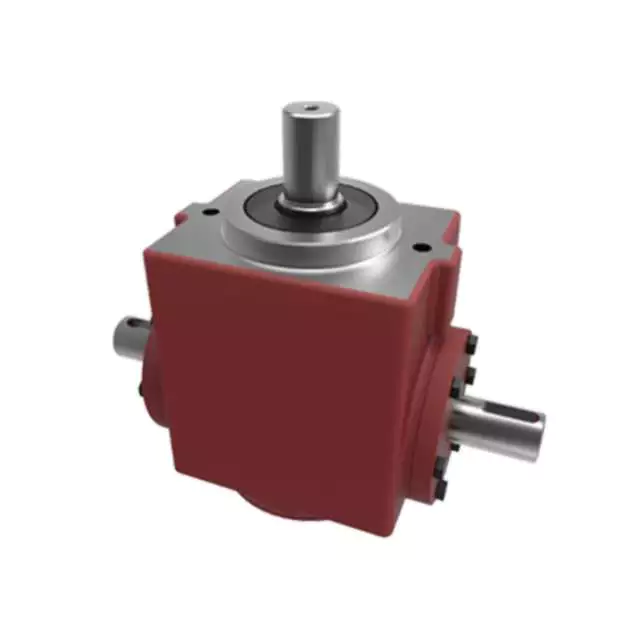
Contribution des boîtes de vitesses agricoles au fonctionnement des tracteurs
La boîte de vitesses agricole est un élément essentiel du système de transmission d'un tracteur. Elle joue un rôle primordial en permettant au tracteur d'effectuer une grande variété de tâches à la ferme. Le bon fonctionnement des tracteurs dépend fortement de celui de leurs boîtes de vitesses, qui assurent diverses fonctions essentielles :
- Transmission de puissance : Les tracteurs doivent fournir une puissance et un couple importants pour effectuer des tâches telles que le labour, le travail du sol et le transport. Les boîtes de vitesses agricoles transmettent la puissance du moteur du tracteur à ses roues ou à d'autres outils, permettant ainsi une transmission efficace de la puissance au sol.
- Contrôle de la vitesse : Different agricultural tasks demand different speeds. Gearboxes allow operators to control the speed of the tractor to match the requirements of the task at hand.
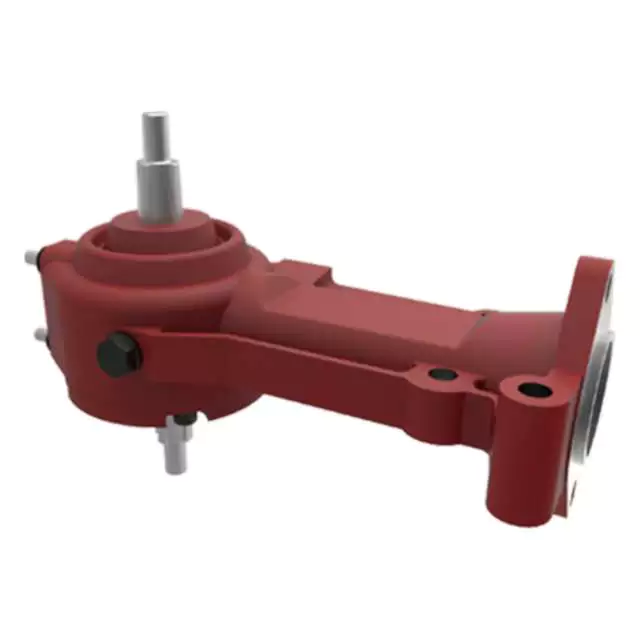
Considérations relatives aux boîtes de vitesses pour l'agriculture intensive
Les applications agricoles intensives nécessitent des réducteurs robustes et fiables, capables de supporter des charges élevées, des conditions difficiles et une utilisation fréquente. Voici les principaux critères à prendre en compte pour le choix d'un réducteur destiné à l'agriculture intensive :
- Capacité de charge : Les boîtes de vitesses robustes doivent avoir une capacité de charge élevée pour répondre aux exigences des machines agricoles, telles que les motoculteurs, les charrues et les moissonneuses-batteuses.
- Durabilité du matériau : Les boîtes de vitesses doivent être construites à partir de matériaux durables, tels que l'acier trempé ou la fonte, capables de résister aux contraintes et aux chocs associés aux tâches intensives.
- Étanchéité et protection : Des mécanismes d'étanchéité et de protection efficaces, tels que des joints et des garnitures robustes, empêchent la pénétration de saletés, d'eau et de contaminants susceptibles de provoquer une usure prématurée et des dommages.
- Système de lubrification : Un système de lubrification fiable et efficace est crucial pour les boîtes de vitesses à usage intensif afin d'assurer une lubrification adéquate des composants sous des charges et des températures élevées.
- Dissipation de la chaleur : Les applications exigeantes génèrent une chaleur importante. Les boîtes de vitesses doivent être équipées de mécanismes de dissipation thermique efficaces, tels que des ailettes de refroidissement ou des refroidisseurs d'huile, afin d'éviter la surchauffe et de maintenir leurs performances.
- Conception et construction : La conception de la boîte de vitesses doit intégrer un carter renforcé, des roulements plus grands et des engrenages robustes pour supporter des charges importantes sans compromettre l'intégrité structurelle.
- Alignement et montage : Un alignement et un montage corrects sont essentiels pour garantir une transmission de puissance fluide et efficace. Un mauvais alignement peut entraîner une usure accrue et une durée de vie réduite de la boîte de vitesses.
- Accessibilité de la maintenance : Les réducteurs pour applications industrielles doivent être conçus pour faciliter l'accès lors de la maintenance. Des éléments tels que les couvercles amovibles et les points d'inspection simplifient l'entretien et les réparations.
- Compatibilité: Les réducteurs doivent être compatibles avec les machines et les tâches spécifiques pour lesquelles ils seront utilisés. Des rapports de transmission et des configurations d'arbre de sortie personnalisables améliorent leur polyvalence.
- Fiabilité et longévité : Les boîtes de vitesses robustes doivent être conçues pour durer, avec une fabrication de qualité et des composants capables de résister aux conditions exigeantes des opérations agricoles.
- Sécurité: Les dispositifs de sécurité, tels que les protections et les mécanismes d'arrêt d'urgence, sont essentiels pour protéger les opérateurs et le personnel à proximité des dangers potentiels.
- Considérations environnementales : La conception des boîtes de vitesses doit tenir compte des réglementations environnementales et des normes d'émissions afin de minimiser l'impact sur l'environnement.
- Rapport coût-efficacité : Bien que les boîtes de vitesses robustes nécessitent un investissement initial plus important, leur durabilité et leurs performances contribuent à une rentabilité à long terme en réduisant les temps d'arrêt et la nécessité de remplacements fréquents.
En tenant compte de ces facteurs, les agriculteurs peuvent sélectionner les boîtes de vitesses robustes appropriées qui améliorent la productivité et la fiabilité de leurs exploitations agricoles.
Whether it’s slow-speed operations like tilling or high-speed transport, the gearbox provides the necessary speed adjustments.
- Pièce jointe à l'implémentation : Les tracteurs sont souvent utilisés avec divers outils, tels que des charrues, des herses et des faucheuses. La boîte de vitesses facilite le raccordement et le fonctionnement de ces outils en transmettant la puissance et le couple du moteur du tracteur aux composants de l'outil.
- Changements de direction : Agricultural gearboxes enable tractors to change direction smoothly. They provide the necessa
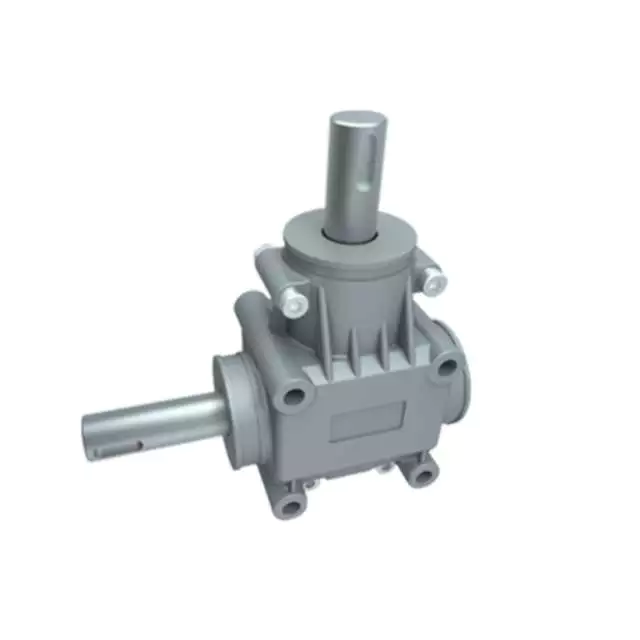
Types of Farming Equipment Incorporating Agricultural Gearboxes
Agricultural gearboxes play a vital role in various farming equipment, enhancing their efficiency and enabling them to perform essential tasks. Here are some types of farming equipment that commonly incorporate agricultural gearboxes:
- Tractors: Agricultural gearboxes are integral components of tractors, contributing to power transmission from the engine to various attachments such as plows, harrows, and mowers.
- Harvesters: Harvesters, used to gather crops like grains, fruits, and vegetables, utilize gearboxes to drive conveyor systems and separators, ensuring smooth and efficient harvesting operations.
- Planters and Seeders: Planters and seeders rely on gearboxes to precisely distribute seeds and fertilizers while maintaining the desired planting depth.
- Sprayers: Agricultural gearboxes are used in sprayers to drive pumps that distribute pesticides, herbicides, and fertilizers over fields.
- Hay Balers: Gearboxes are essential in hay balers for compacting and forming bales of hay, enabling easy storage and transportation.
- Manure Spreaders: Manure spreaders incorporate gearboxes to distribute and spread fertilizers and compost evenly across fields.
- Grain Augers: Grain augers, used for loading and unloading grains, feature gearboxes to drive the rotating screw mechanism that lifts and transfers grains.
- Cultivators: Cultivators use gearboxes to drive rotating tines or blades that loosen and prepare the soil for planting.
- Rotary Cutters: Rotary cutters, often attached to tractors, utilize gearboxes to power the spinning blades used for cutting tall grass, weeds, and brush.
- Threshers: Threshers, employed for separating grains from their husks or stalks, incorporate gearboxes to drive the threshing mechanisms.
These examples demonstrate the diverse applications of agricultural gearboxes across a wide range of farming equipment. By providing reliable power transmission and control, agricultural gearboxes contribute significantly to the productivity and efficiency of modern agricultural practices.
ry gearing arrangements to reverse the tractor’s movement, making it easy to maneuver around the farm, fields, and obstacles.
- Adaptation au terrain : Les boîtes de vitesses agricoles permettent aux tracteurs de s'adapter aux différents types de terrains et de sols. En ajustant le rapport de transmission, les tracteurs peuvent optimiser leurs performances pour des tâches telles que la montée de pentes, le travail sur des terrains accidentés ou le remorquage de charges lourdes.
Les boîtes de vitesses agricoles modernes sont conçues pour offrir durabilité et fiabilité dans les conditions exigeantes du monde agricole. Elles sont souvent dotées de fonctionnalités telles que plusieurs vitesses, des mécanismes de synchronisation et des systèmes de lubrification performants afin d'optimiser leurs performances et leur durée de vie.
Un entretien régulier et des contrôles périodiques sont essentiels pour maintenir la boîte de vitesses agricole en parfait état. Une lubrification adéquate, l'inspection des engrenages et la réparation de tout signe d'usure ou de dommage contribuent à la longévité et au bon fonctionnement de la boîte de vitesses, garantissant ainsi la fonctionnalité du tracteur tout au long des saisons agricoles.


editor by CX 2023-08-31