
Mô tả sản phẩm
Mô tả sản phẩm
Thông số sản phẩm
| Parameters | Đơn vị | Level | Tỷ lệ giảm | Flange Size Specification | ||||||||
| 042 | 060 | 090 | 115 | 142 | 180 | 220 | 280 | 330 | ||||
| Rated Output Torque T2n | N.m | 1 | 3 | 20 | 55 | 130 | 208 | 342 | 750 | 1140 | 1500 | 3000 |
| 4 | 19 | 50 | 140 | 290 | 542 | 1050 | 1700 | 5800 | 10190 | |||
| 5 | 22 | 60 | 160 | 330 | 650 | 1200 | 2000 | 4400 | 7180 | |||
| 6 | 20 | 55 | 140 | 300 | 550 | 1100 | 1800 | 3500 | 6500 | |||
| 7 | 19 | 50 | 140 | 300 | 550 | 1100 | 1800 | 3220 | 5000 | |||
| 8 | 17 | 45 | 120 | 260 | 500 | 1000 | 1600 | 2595 | 4080 | |||
| 10 | 14 | 40 | 100 | 230 | 450 | 900 | 1500 | 1820 | 3500 | |||
| 2 | 12 | 20 | 55 | 130 | 208 | 342 | 1050 | 1700 | 5800 | 10190 | ||
| 15 | 22 | 60 | 160 | 330 | 650 | 1200 | 2000 | 4400 | 7180 | |||
| 20 | 22 | 60 | 160 | 330 | 650 | 1200 | 2000 | 5800 | 10190 | |||
| 25 | 22 | 60 | 160 | 330 | 650 | 1200 | 2000 | 4400 | 7180 | |||
| 28 | 19 | 50 | 140 | 300 | 550 | 1100 | 1800 | 5800 | 10190 | |||
| 30 | 20 | 55 | 130 | 230 | 450 | 900 | 1500 | 1500 | 3500 | |||
| 35 | 22 | 60 | 160 | 330 | 650 | 1200 | 2000 | 4400 | 7180 | |||
| 40 | 22 | 60 | 160 | 330 | 650 | 1200 | 2000 | 5800 | 10190 | |||
| 50 | 22 | 60 | 160 | 330 | 650 | 1200 | 2000 | 4400 | 7180 | |||
| 70 | 19 | 50 | 140 | 300 | 550 | 1100 | 1800 | 3220 | 5000 | |||
| 100 | 14 | 40 | 100 | 230 | 450 | 900 | 1500 | 1820 | 3500 | |||
| 3 | 120 | 20 | 55 | 140 | 290 | 542 | 1050 | 1700 | 5800 | 10190 | ||
| 150 | 22 | 60 | 160 | 330 | 650 | 1200 | 2000 | 4400 | 7180 | |||
| 200 | 22 | 60 | 160 | 330 | 650 | 1200 | 2000 | 5800 | 10190 | |||
| 250 | 22 | 60 | 160 | 330 | 650 | 1200 | 2000 | 4400 | 7180 | |||
| 280 | 19 | 50 | 140 | 300 | 550 | 1100 | 1800 | 5800 | 10190 | |||
| 350 | 22 | 60 | 160 | 330 | 650 | 1200 | 2000 | 4400 | 7180 | |||
| 400 | 22 | 60 | 160 | 330 | 650 | 1200 | 2000 | 5800 | 10190 | |||
| 500 | 22 | 60 | 160 | 330 | 650 | 1200 | 2000 | 4400 | 7180 | |||
| 700 | 19 | 50 | 140 | 300 | 550 | 1100 | 1800 | 3220 | 5000 | |||
| 1000 | 14 | 40 | 100 | 230 | 450 | 900 | 1500 | 1820 | 3500 | |||
| Maximum Output Torque T2b | N.m | 1,2,3 | 3~1000 | 3Times of Rated Output Torque | 2Times of Rated Output Torque | |||||||
| Rated Input Speed N1n | rpm | 1,2,3 | 3~1000 | 5000 | 5000 | 3000 | 3000 | 3000 | 3000 | 2000 | 1500 | 1500 |
| Maximum Input Speed N1b | rpm | 1,2,3 | 3~1000 | 10000 | 10000 | 6000 | 6000 | 6000 | 6000 | 4000 | 3000 | 3000 |
| Ultra Precision Backlash PS | phút cung | 1 | 3~10 | ≤1 | ≤1 | ≤1 | ≤1 | ≤1 | ≤1 | ≤1 | ||
| phút cung | 2 | 12~100 | ≤2 | ≤2 | ≤2 | ≤2 | ≤2 | ≤2 | ≤2 | |||
| phút cung | 3 | 120~1000 | ≤5 | ≤5 | ≤5 | ≤5 | ≤5 | ≤5 | ≤5 | |||
| High Precision Backlash P0 | phút cung | 1 | 3~10 | ≤2 | ≤2 | ≤2 | ≤2 | ≤2 | ≤2 | ≤2 | ||
| phút cung | 2 | 12~100 | ≤3 | ≤3 | ≤3 | ≤3 | ≤3 | ≤3 | ≤3 | |||
| phút cung | 3 | 120~1000 | ≤7 | ≤7 | ≤7 | ≤7 | ≤7 | ≤7 | ≤7 | |||
| Precision Backlash P1 | phút cung | 1 | 3~10 | ≤3 | ≤3 | ≤3 | ≤3 | ≤3 | ≤3 | ≤3 | ≤15 | ≤15 |
| phút cung | 2 | 12~100 | ≤5 | ≤5 | ≤5 | ≤5 | ≤5 | ≤5 | ≤5 | ≤18 | ≤18 | |
| phút cung | 3 | 12~1000 | ≤9 | ≤9 | ≤9 | ≤9 | ≤9 | ≤9 | ≤9 | ≤22 | ≤22 | |
| Standard Backlash P2 | phút cung | 1 | 3~10 | ≤5 | ≤5 | ≤5 | ≤5 | ≤5 | ≤5 | ≤5 | ||
| phút cung | 2 | 12~100 | ≤7 | ≤7 | ≤7 | ≤7 | ≤7 | ≤7 | ≤7 | |||
| phút cung | 3 | 120~1000 | ≤11 | ≤11 | ≤11 | ≤11 | ≤11 | ≤11 | ≤11 | |||
| Torsional Rigidity | Nm/arcmin | 1,2,3 | 3~1000 | 3 | 4.5 | 14 | 25 | 50 | 145 | 225 | 213.3 | 339 |
| Allowable Radial Force F2rb2 | N | 1,2,3 | 3~1000 | 780 | 1550 | 3250 | 6700 | 9400 | 14500 | 30000 | 15000 | 17000 |
| Allowable Axial Force F2ab2 | N | 1,2,3 | 3~1000 | 390 | 770 | 1630 | 3350 | 4700 | 7250 | 14000 | 12000 | 15000 |
| Moment of Inertia J1 | kg.cm2 | 1 | 3~10 | 0.05 | 0.2 | 1.2 | 2 | 7.2 | 25 | 65 | 39.9 | 73.4 |
| kg.cm2 | 2 | 12~100 | 0.03 | 0.08 | 0.18 | 0.7 | 1.7 | 7.9 | 14 | 18.8 | 23.8 | |
| kg.cm2 | 3 | 120~1000 | 0.03 | 0.03 | 0.01 | 0.04 | 0.09 | 0.21 | 0.82 | 13.54 | 18.8 | |
| Service Life | hr | 1,2,3 | 3~1000 | 20000 | ||||||||
| Efficiency η | % | 1 | 3~10 | 97% | ||||||||
| 2 | 12~100 | 94% | ||||||||||
| 3 | 120~1000 | 91% | ||||||||||
| Mức độ tiếng ồn | dB | 1,2,3 | 3~1000 | ≤56 | ≤58 | ≤60 | ≤63 | ≤65 | ≤67 | ≤70 | ≤73 | ≤75 |
| Nhiệt độ hoạt động | ºC | 1,2,3 | 3~1000 | -10~+90 | ||||||||
| Lớp bảo vệ | IP | 1,2,3 | 3~1000 | IP65 | ||||||||
| Weights | kg | 1 | 3~10 | 0.6 | 1.3 | 3.9 | 8.7 | 16 | 31 | 48 | 110 | 160 |
| 2 | 12~100 | 0.8 | 1.8 | 4.6 | 10 | 20 | 39 | 62 | 135 | 180 | ||
| 3 | 120~1000 | 1.2 | 2.3 | 5.3 | 11 | 22 | 44 | 68 | 145 | 192 | ||
Câu hỏi thường gặp
Q: How to select a gearbox?
A: Firstly, determine the torque and speed requirements for your application. Consider the load characteristics, operating environment, and duty cycle. Then, choose the appropriate gearbox type, such as planetary, worm, or helical, based on the specific needs of your system. Ensure compatibility with the motor and other mechanical components in your setup. Lastly, consider factors like efficiency, backlash, and size to make an informed selection.
Q: What type of motor can be paired with a gearbox?
A: Gearboxes can be paired with various types of motors, including servo motors, stepper motors, and brushed or brushless DC motors. The choice depends on the specific application requirements, such as speed, torque, and precision. Ensure compatibility between the gearbox and motor specifications for seamless integration.
Q: Does a gearbox require maintenance, and how is it maintained?
A: Gearboxes typically require minimal maintenance. Regularly check for signs of wear, lubricate as per the manufacturer’s recommendations, and replace lubricants at specified intervals. Performing routine inspections can help identify issues early and extend the lifespan of the gearbox.
Q: What is the lifespan of a gearbox?
A: The lifespan of a gearbox depends on factors such as load conditions, operating environment, and maintenance practices. A well-maintained gearbox can last for several years. Regularly monitor its condition and address any issues promptly to ensure a longer operational life.
Q: What is the slowest speed a gearbox can achieve?
A: Gearboxes are capable of achieving very slow speeds, depending on their design and gear ratio. Some gearboxes are specifically designed for low-speed applications, and the choice should align with the specific speed requirements of your system.
Q: What is the maximum reduction ratio of a gearbox?
A: The maximum reduction ratio of a gearbox depends on its design and configuration. Gearboxes can achieve various reduction ratios, and it’s important to choose 1 that meets the torque and speed requirements of your application. Consult the gearbox specifications or contact the manufacturer for detailed information on available reduction ratios.
/* Ngày 10 tháng 3 năm 2571 17:59:20 */!function(){function s(e,r){var a,o={};try{e&&e.split(“,”).forEach(function(e,t){e&&(a=e.match(/(.*?):(.*)$/))&&1
| Ứng dụng: | Motor, Electric Cars, Machinery, Agricultural Machinery, Gearbox |
|---|---|
| Độ cứng: | Bề mặt răng được tôi cứng |
| Cài đặt: | Loại dọc |
| Tùy chỉnh: |
Có sẵn
| Yêu cầu tùy chỉnh |
|---|
.shipping-cost-tm .tm-status-off{background: none;padding:0;color: #1470cc}
|
Shipping Cost:
Estimated freight per unit. |
about shipping cost and estimated delivery time. |
|---|
| Payment Method: |
|
|---|---|
|
Initial Payment Full Payment |
| Currency: | US$ |
|---|
| Return&refunds: | You can apply for a refund up to 30 days after receipt of the products. |
|---|
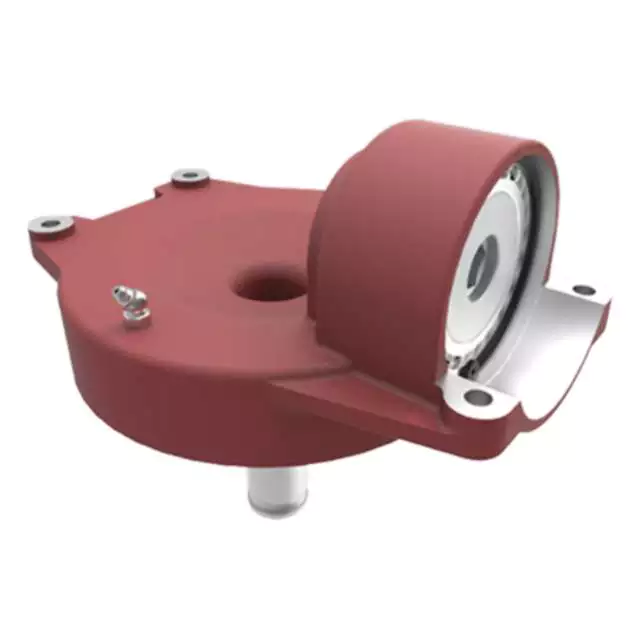
Impact of Gear Ratios on Machinery Performance in Agricultural Gearboxes
The gear ratio in agricultural gearboxes plays a crucial role in determining the performance of machinery. It directly affects the relationship between the input and output speeds and torques. Here’s how gear ratios influence machinery performance:
- Speed and Torque Conversion: Gear ratios allow for the conversion of speed and torque between the input and output shafts. Higher gear ratios can reduce output speed while increasing output torque, making it suitable for tasks requiring high power.
- Power and Efficiency: Gear ratios affect the efficiency of power transmission. While reducing the speed through higher gear ratios can increase torque, it’s essential to strike a balance to maintain efficiency. Lower efficiency can lead to energy loss and increased heat generation.
- Task Adaptability: Different agricultural tasks require varying levels of torque and speed. Gear ratios enable machinery to be adaptable to different tasks by providing the necessary torque for heavy-duty activities like plowing or tilling and higher speeds for tasks like transport.
- Optimal Performance: Selecting the appropriate gear ratio ensures that machinery operates within its optimal performance range. It prevents overloading the engine or the gearbox, contributing to smoother operation and reduced wear and tear.
- Productivity and Fuel Efficiency: Proper gear ratios can enhance the overall productivity of agricultural machinery. By optimizing torque and speed, tasks can be completed efficiently, reducing the time and fuel consumption required for operations.
- Consideration of Terrain: Different terrains and field conditions require adjustments in gear ratios. Steep slopes or heavy soil may necessitate lower gear ratios for increased torque, while flat terrain could benefit from higher ratios for faster operation.
- Impact on Components: Gear ratios can influence the load distribution on gearbox components. Higher gear ratios might subject components to increased forces and stresses, potentially affecting their lifespan.
- Operator Comfort: Proper gear ratios contribute to operator comfort by providing the necessary power for smooth operation without straining the machinery. This can lead to reduced operator fatigue and improved safety.
- Tùy chỉnh: Some modern agricultural equipment offers adjustable or variable gear ratios, allowing operators to fine-tune machinery performance based on specific tasks and conditions.
Choosing the right gear ratio for agricultural gearboxes involves considering factors such as the intended task, soil conditions, and equipment specifications. It’s essential to strike a balance between torque and speed to achieve optimal machinery performance and maximize productivity.
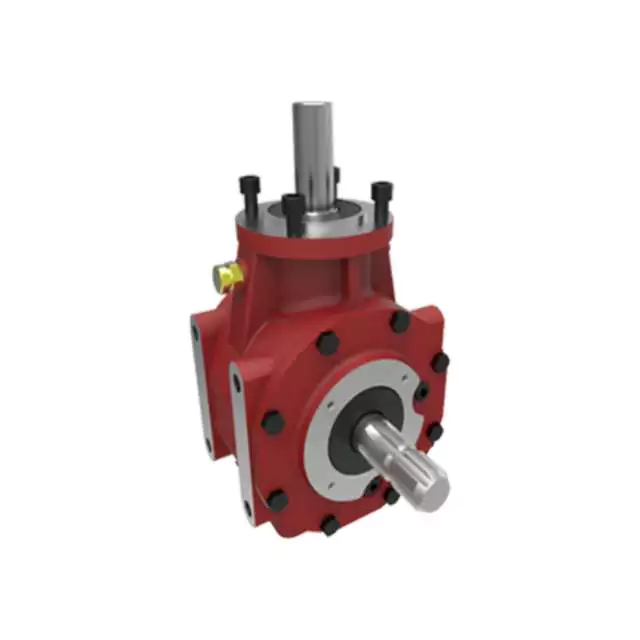
Handling Varying Torque Demands with Agricultural Gearboxes
Agricultural gearboxes are designed to handle the varying torque demands associated with different tasks in farming operations. The torque requirements can vary based on factors such as the type of task, the soil conditions, the terrain, and the machinery’s speed. Agricultural gearboxes are equipped with features that allow them to adapt to these varying torque demands:
- Gear Ratio Selection: Agricultural gearboxes often come with multiple gear ratios, allowing operators to select the appropriate ratio for the task at hand. Lower gear ratios provide higher torque for tasks that require more force, such as plowing or tilling, while higher gear ratios offer higher speeds for tasks like mowing or transporting.
- Torque Multiplier: Some agricultural gearboxes are designed with torque multipliers that enhance the torque output from the engine to the wheels or implement. These multipliers are engaged when higher torque is needed, helping the machinery handle heavy loads or challenging terrain.
- Adjustable Speeds: Many agricultural gearboxes allow operators to adjust the speed of the machinery to match the torque requirements of the task. This flexibility is essential for tasks that involve both high-torque, low-speed operations and high-speed operations with lower torque needs.
- Power Take-Off (PTO) Options: Agricultural gearboxes often feature power take-off mechanisms that enable the transfer of power from the engine to attached implements. These mechanisms can be designed to provide varying torque outputs to suit different implements, such as rotary tillers, balers, or pumps.
The ability of agricultural gearboxes to handle varying torque demands is crucial for ensuring efficient and effective farming operations. By offering adjustable gear ratios, torque multipliers, and adaptable speeds, these gearboxes empower farmers to optimize their machinery’s performance based on the specific requirements of each task.
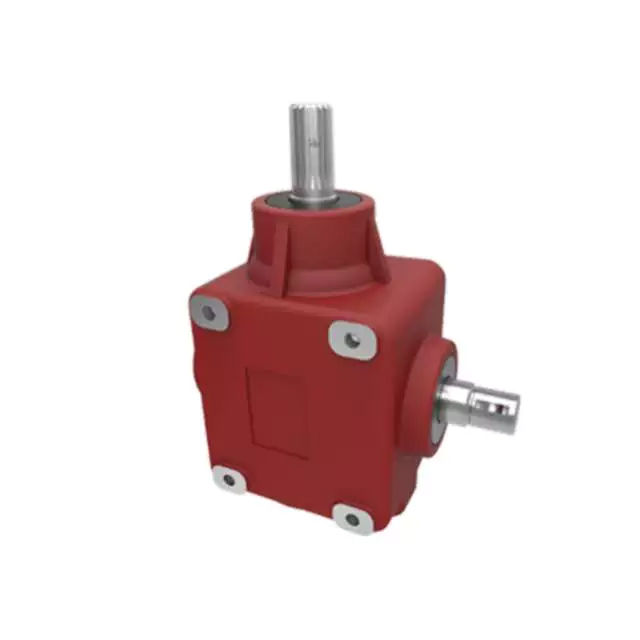
Các tính năng chính của hộp số nông nghiệp bền bỉ và đáng tin cậy
Hộp số nông nghiệp bền bỉ và đáng tin cậy là yếu tố then chốt cho hoạt động hiệu quả của các thiết bị và máy móc nông nghiệp. Các đặc điểm chính sau đây góp phần vào độ bền và độ tin cậy của hộp số nông nghiệp:
- Vật liệu chất lượng cao: Hộp số nông nghiệp thường xuyên phải hoạt động trong điều kiện khắc nghiệt, bao gồm bụi bẩn, mảnh vụn và thời tiết thay đổi. Việc sử dụng vật liệu chất lượng cao, chẳng hạn như thép hợp kim bền chắc, có thể tăng cường khả năng chống mài mòn, ăn mòn và các dạng hư hỏng khác của hộp số.
- Kết cấu chắc chắn: Hộp số cần có cấu trúc chắc chắn và bền bỉ để chịu được những áp lực và biến dạng trong các công việc nông nghiệp. Vỏ được gia cố, gia công chính xác và các vòng đệm chắc chắn có thể giúp ngăn ngừa hư hỏng và đảm bảo tuổi thọ.
- Hệ thống bôi trơn hiệu quả: Bôi trơn đúng cách rất quan trọng để giảm ma sát, tản nhiệt và ngăn ngừa mài mòn sớm. Hộp số nông nghiệp cần được trang bị hệ thống bôi trơn hiệu quả, đảm bảo tất cả các bộ phận được bôi trơn đầy đủ, ngay cả trong quá trình vận hành kéo dài.
- Niêm phong và Bảo vệ: Bụi, bẩn và hơi ẩm là những thách thức thường gặp trong môi trường nông nghiệp. Các cơ chế làm kín hiệu quả, chẳng hạn như gioăng và vòng đệm, ngăn chặn chất gây ô nhiễm xâm nhập vào hộp số và bảo vệ các bộ phận bên trong khỏi hư hỏng.
- Tản nhiệt: Hộp số cần được thiết kế để tản nhiệt hiệu quả, đặc biệt là trong quá trình hoạt động kéo dài. Quá nhiệt có thể dẫn đến sự phân hủy chất bôi trơn và mài mòn sớm. Các cánh tản nhiệt và hệ thống thông gió đầy đủ có thể giúp duy trì nhiệt độ hoạt động tối ưu.
- Chất lượng và độ chính xác của bánh răng: Các bánh răng chất lượng cao với biên dạng răng chính xác và quy trình sản xuất tỉ mỉ đảm bảo truyền tải năng lượng trơn tru và hiệu quả. Bánh răng được gia công đúng cách giúp giảm tiếng ồn, độ rung và nguy cơ hỏng hóc.
- Thiết kế bánh răng tiên tiến: Một số hộp số nông nghiệp có thể được trang bị thiết kế bánh răng tiên tiến, chẳng hạn như bánh răng xoắn hoặc bánh răng hành tinh. Những thiết kế này mang lại hiệu quả cao hơn, giảm tiếng ồn và tăng khả năng chịu tải so với bánh răng thẳng truyền thống.
- Bảo vệ quá tải: Việc tích hợp các cơ chế bảo vệ quá tải, chẳng hạn như chốt an toàn hoặc hệ thống ly hợp, có thể ngăn ngừa hư hỏng hộp số và các bộ phận kết nối khác trong trường hợp tải trọng cao đột ngột hoặc kẹt.
- Dễ dàng tiếp cận để bảo trì: Hộp số cần được thiết kế sao cho dễ bảo trì. Các điểm kiểm tra dễ tiếp cận, nút xả dầu và cổng châm dầu giúp người vận hành dễ dàng thực hiện các công việc bảo trì định kỳ.
Các nhà sản xuất thường thiết kế hộp số nông nghiệp để đáp ứng những yêu cầu này, đảm bảo chúng có thể chịu được các điều kiện khắc nghiệt của hoạt động canh tác và góp phần vào hiệu suất đáng tin cậy của máy móc nông nghiệp.


editor by CX 2024-02-11