
Produktbeschreibung
agricultural mower Parts bevel Gearbox Transmission Motor Planetary Tiller Worm Washing Machine Gear Box Speed Reducer Stainless Steel farm gearbox
Application of bevel Gearbox
Bevel gears are used in a variety of applications, including:
- Automotive: Bevel gears are used in the differential of a car, which allows the wheels to rotate at different speeds when the car is turning.
- Machine tools: Bevel gears are used in machine tools, such as lathes and mills, to transmit power from the motor to the cutting tool.
- Conveyors: Bevel gears are used in conveyors to transmit power from the motor to the conveyor belt.
- Fans: Bevel gears are used in fans to transmit power from the motor to the fan blades.
- Pumps: Bevel gears are used in pumps to transmit power from the motor to the pump impeller.
- Wind turbines: Bevel gears are used in wind turbines to transmit power from the turbine blades to the generator.
Bevel gears are a type of gear that has teeth that are angled. This allows them to transmit power between shafts that are not parallel. Bevel gears are typically made of steel or cast iron, and they can be either single-stage or multi-stage. Single-stage bevel gears have 1 set of gears, while multi-stage bevel gears have 2 or more sets of gears.
Bevel gears are a versatile type of gear that can be used in a variety of applications. They are typically used in applications where there is a need to transmit power between shafts that are not parallel. Bevel gears are also used in applications where there is a need to change the direction of rotation.
| Anwendung: | Motor, Electric Cars, Motorcycle, Machinery, Marine, Toy, Agricultural Machinery, Car |
|---|---|
| Funktion: | Distribution Power, Clutch, Change Drive Torque, Change Drive Direction, Speed Changing, Speed Reduction, Speed Increase |
| Layout: | Three-Ring |
| Härte: | Gehärtete Zahnoberfläche |
| Installation: | Torque Arm Type |
| Schritt: | Stepless |
| Proben: |
US$ 9999/Piece
1 Stück (Mindestbestellmenge) | |
|---|
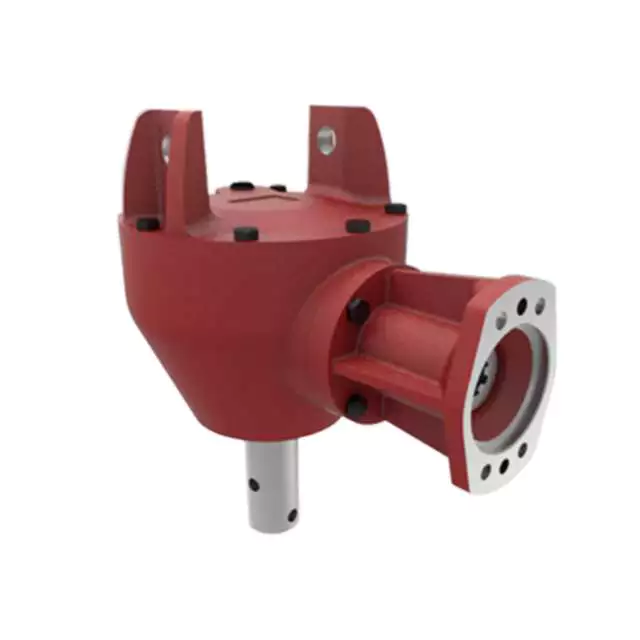
Fallstudien: Erfolgreiche Implementierungen von Agrargetrieben
Mehrere Fallstudien heben die erfolgreiche Integration von Agrargetrieben in Landmaschinen hervor:
- Fallstudie 1: Vielseitigkeit des Traktors
Ein landwirtschaftlicher Betrieb im Mittleren Westen setzte Traktoren mit verstellbaren Getrieben ein. Diese Getriebe ermöglichten einen nahtlosen Wechsel zwischen Pflügen, Säen und Ernten. Die Möglichkeit, Geschwindigkeit und Drehmoment individuell anzupassen, steigerte die Effizienz und reduzierte den Bedarf an mehreren Maschinen.
- Fallstudie 2: Obstbaumanagement
Eine Obstplantage in Kalifornien nutzte spezielle Getriebe für ihre Erntemaschinen. Diese Getriebe ermöglichten eine kontrollierte Bewegung und präzise Positionierung der Maschinen zwischen den Bäumen. Dank ihrer Anpassungsfähigkeit konnten die Erntemaschinen das unebene Gelände der Plantage bewältigen und gleichzeitig Schäden an Bäumen und Früchten minimieren.
- Fallstudie 3: Präzisionspflanzung
Ein landwirtschaftlicher Betrieb in Europa integrierte Präzisionssaatmaschinen mit Getrieben, die über einstellbare Übersetzungsverhältnisse verfügten. Dies ermöglichte eine präzise Steuerung von Saatgutablage und -tiefe. Die Getriebe spielten eine entscheidende Rolle für einen gleichmäßigen Pflanzenaufgang und einen optimalen Saatgut-Boden-Kontakt.
- Fallstudie 4: Multitasking-Tools
Eine landwirtschaftliche Genossenschaft in Australien setzte multifunktionale Geräte mit vielseitigen Getrieben ein. Diese Geräte konnten nahtlos zwischen verschiedenen Arbeitsgängen wie Pflügen, Eggen und Düngen wechseln. Die Fähigkeit der Getriebe, Drehmoment und Drehzahlverhältnisse zu steuern, gewährleistete optimale Leistung bei den unterschiedlichen Aufgaben.
- Fallstudie 5: Bodenschutz
Ein landwirtschaftlicher Betrieb in Afrika setzte Getriebe in seinen Bodenschutzmaßnahmen ein. Durch den Anbau spezieller Geräte mit verstellbaren Getrieben an die Traktoren konnte der Betrieb die Bodenerosion wirksam eindämmen und die Wasserinfiltration verbessern. Die Getriebe ermöglichten präzise Anpassungen an Bodenart und Hangneigung.
Diese Fallstudien veranschaulichen die wirkungsvolle Rolle von Getrieben für die Landwirtschaft bei der Steigerung von Effizienz, Vielseitigkeit und Produktivität in einem breiten Spektrum landwirtschaftlicher Anwendungen.
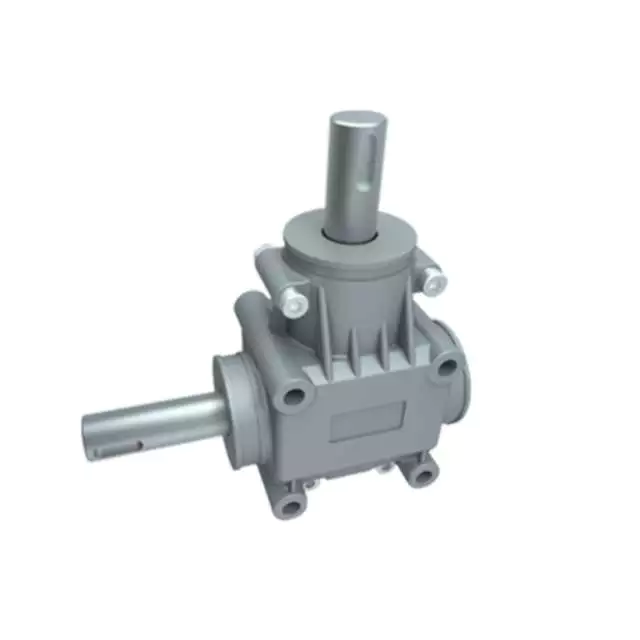
Types of Farming Equipment Incorporating Agricultural Gearboxes
Agricultural gearboxes play a vital role in various farming equipment, enhancing their efficiency and enabling them to perform essential tasks. Here are some types of farming equipment that commonly incorporate agricultural gearboxes:
- Tractors: Agricultural gearboxes are integral components of tractors, contributing to power transmission from the engine to various attachments such as plows, harrows, and mowers.
- Harvesters: Harvesters, used to gather crops like grains, fruits, and vegetables, utilize gearboxes to drive conveyor systems and separators, ensuring smooth and efficient harvesting operations.
- Planters and Seeders: Planters and seeders rely on gearboxes to precisely distribute seeds and fertilizers while maintaining the desired planting depth.
- Sprayers: Agricultural gearboxes are used in sprayers to drive pumps that distribute pesticides, herbicides, and fertilizers over fields.
- Hay Balers: Gearboxes are essential in hay balers for compacting and forming bales of hay, enabling easy storage and transportation.
- Manure Spreaders: Manure spreaders incorporate gearboxes to distribute and spread fertilizers and compost evenly across fields.
- Grain Augers: Grain augers, used for loading and unloading grains, feature gearboxes to drive the rotating screw mechanism that lifts and transfers grains.
- Cultivators: Cultivators use gearboxes to drive rotating tines or blades that loosen and prepare the soil for planting.
- Rotary Cutters: Rotary cutters, often attached to tractors, utilize gearboxes to power the spinning blades used for cutting tall grass, weeds, and brush.
- Threshers: Threshers, employed for separating grains from their husks or stalks, incorporate gearboxes to drive the threshing mechanisms.
These examples demonstrate the diverse applications of agricultural gearboxes across a wide range of farming equipment. By providing reliable power transmission and control, agricultural gearboxes contribute significantly to the productivity and efficiency of modern agricultural practices.
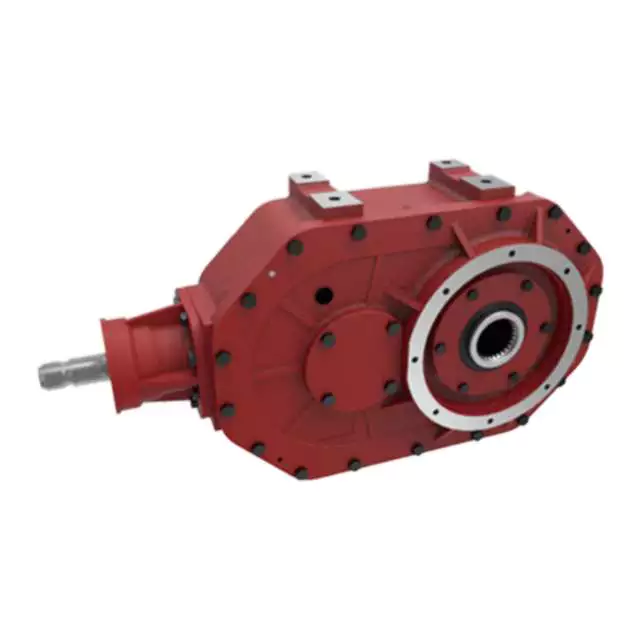
Power Transmission in Farming Equipment with Agricultural Gearboxes
Agricultural gearboxes play a vital role in facilitating power transmission within various types of farming equipment. These gearboxes are integral components that enable the transfer of rotational power from a tractor’s engine to different agricultural implements and machinery. Here’s how agricultural gearboxes contribute to power transmission:
- Speed Reduction: In many farming operations, the engine of a tractor or other power source operates at a higher speed than is suitable for the optimal functioning of agricultural implements. Agricultural gearboxes provide speed reduction by using a combination of gears with different numbers of teeth. This reduction in speed allows the machinery to operate at the required speed for efficient tasks like tilling, planting, or harvesting.
- Power Multiplication: Some agricultural tasks require a significant amount of torque to operate effectively. Gearboxes can multiply the input torque from the engine to generate higher torque at the output shaft. This is crucial for tasks such as plowing, where substantial force is needed to break up the soil.
- Directional Change: Agricultural gearboxes also allow for changes in the direction of power transmission. For instance, a tractor’s power take-off (PTO) shaft may need to transmit power at a right angle to the tractor’s engine. Gearboxes with bevel gears or other arrangements enable this change in direction, ensuring that power is properly directed to the implement.
- Power Distribution: In certain cases, power needs to be distributed to multiple components or implements. Agricultural gearboxes with multiple output shafts can distribute power to different tasks simultaneously, optimizing efficiency and productivity.
- Attachment Operation: Many agricultural implements, such as plows, seed drills, and rotary mowers, require consistent and controlled power to function effectively. Gearboxes provide the necessary power and control to these attachments, ensuring uniform operation and accurate results.
By facilitating speed reduction, power multiplication, directional changes, power distribution, and attachment operation, agricultural gearboxes contribute significantly to the overall efficiency and productivity of farming equipment. They allow farmers to adapt their machinery to various tasks, optimize power usage, and achieve better results in different agricultural operations.


editor by CX 2023-09-14